
June 23, 2026
How to Tell if Your Roof Has Hail Damage in Central Texas
How to spot hail damage on your roof, when to call a roofer, and how the insurance claim process works in Central Texas.
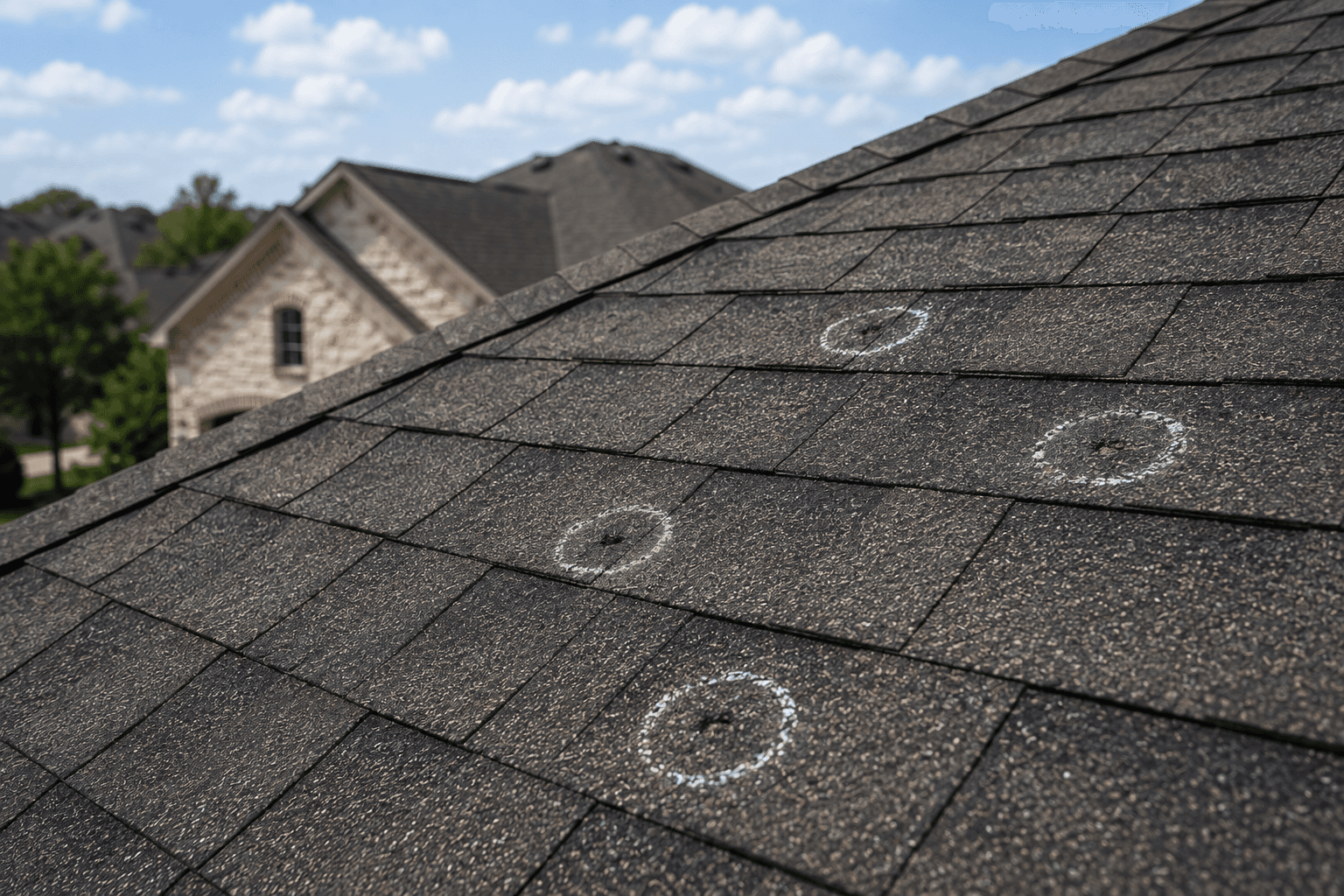
If you live in Leander, Cedar Park, Round Rock, or Georgetown, your roof has probably taken hail and you do not know it. Central Texas sits in one of the most active hail corridors in the country. According to the Insurance Information Institute, Texas recorded 902 major hail events in 2025, more than double the next closest state.
The I-35 corridor from Killeen down to San Marcos catches the worst of it. Hail big enough to crack shingles and dent metal does not always leave damage you can spot from the driveway. That is what makes it dangerous. The damage is there, it is getting worse, and most homeowners do not find out until water is coming through the ceiling.
What Hail Damage Actually Looks Like on a Shingle Roof
Most people expect to see missing shingles or holes. That is not usually what happens.
Hail hits the shingle and knocks the granules loose. You get a soft, bruised spot that looks fine from 30 feet away but is completely exposed underneath. The Asphalt Roofing Manufacturers Association identifies granule loss as one of the primary indicators of hail impact on asphalt shingles.
Here is what a roofer looks for during a hail inspection:
- Bruised shingles. Soft spots where the granule surface has been knocked off by impact. You can feel them by pressing with your thumb.
- Cracked or split shingles. Larger hailstones can fracture the shingle mat itself, not just the surface.
- Dented flashing. The metal around chimneys, vents, and roof-to-wall intersections shows impact marks.
- Damaged pipe boots. The rubber seals around vent pipes crack under hail impact and start leaking.
- Ridge cap damage. The shingles along the peak of the roof take hits from every direction.
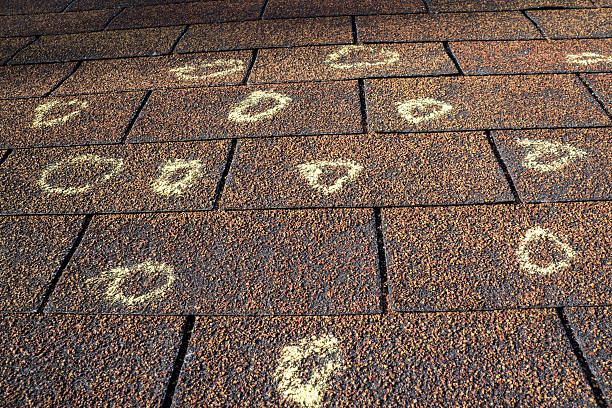
Those granules are the shingle's first line of defense. They block UV radiation and shed water. Once a hailstone knocks them off, the exposed asphalt underneath breaks down fast. A shingle that lost its granules in April could be leaking by October. We see this timeline play out regularly on roofs in Leander and Cedar Park.
Signs You Can Check From the Ground
You do not need to climb on the roof. In fact, you should not. But you can learn a lot by looking at everything else around your property.
Check your metal first. Look at your gutters, downspouts, and metal flashing for dents. Check your mailbox cap, fence post caps, and any outdoor light fixtures. If metal around your property shows impact marks, your shingles took the same hits.
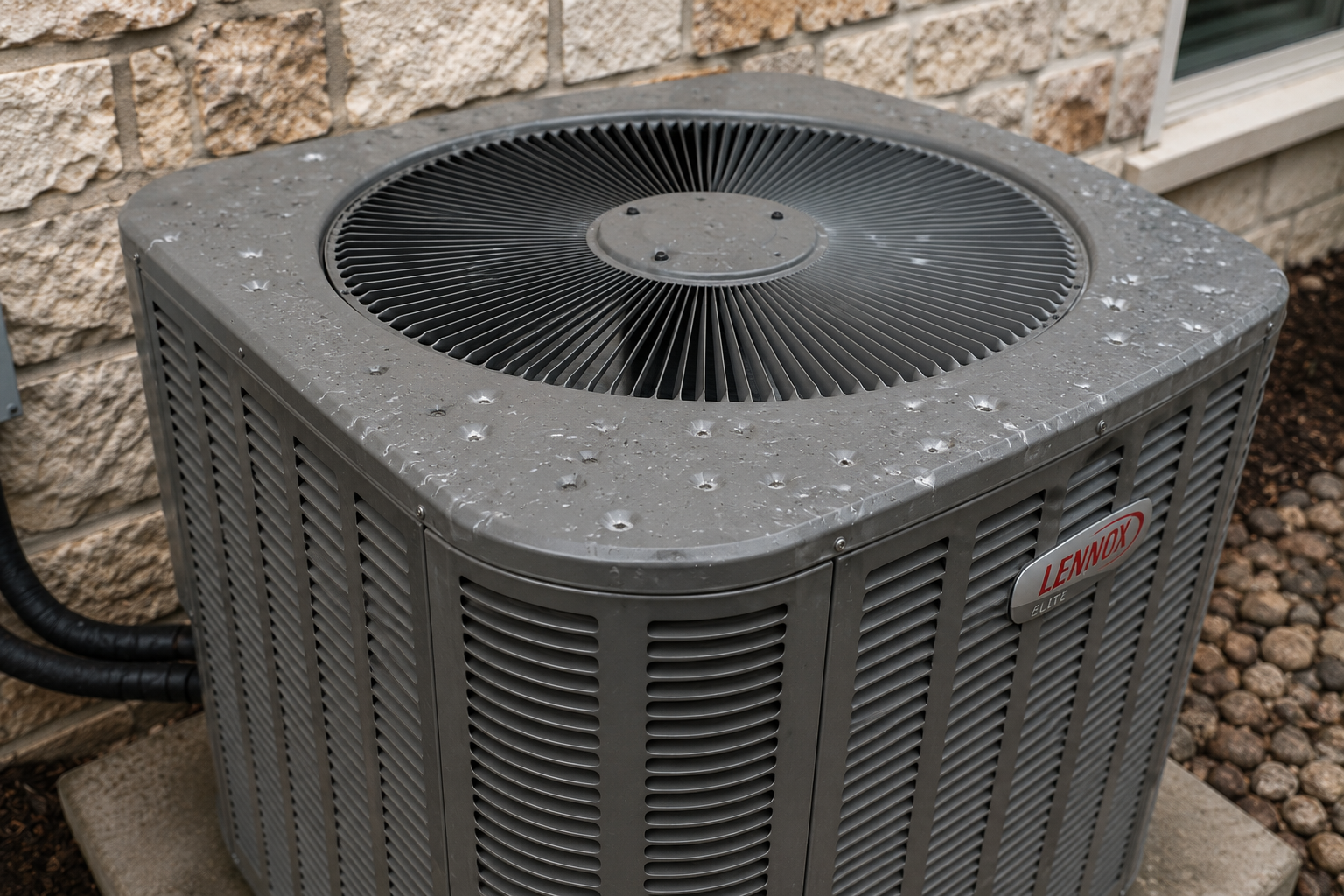
Your A/C unit is the best indicator. The metal housing on an air conditioning condenser shows hail dents clearly. If you see pockmarks on the sides or top of the unit, your roof was hit too. Same storm, same hail size, and your shingles are softer than sheet metal.
Look at your car. If your car was outside during the storm and has dents on the hood or roof, that is the same hail that hit your house.
Watch your neighbors. If roofing crews start showing up on your street after a storm, your house likely took the same damage. Same hail, same neighborhood. The NOAA Storm Prediction Center logs hail reports by time, size, and location, which can help you confirm whether a storm that hit your area produced damaging hail.
Check your gutters for granules. After a hailstorm, look inside your gutters and at the bottom of your downspouts. A large amount of gritty, sand-like material means granules were knocked off your shingles. Some granule wash is normal on a new roof. A heavy deposit after a storm is not.
How the Insurance Claim Process Works in Texas
Most Texas homeowner policies cover hail damage. Here is how the process typically goes.
A roofing contractor inspects your roof and documents the damage with photos, measurements, and a written report. You call your insurance company to open a claim. The company sends an adjuster to verify the damage. If the claim is approved, they issue payment for the repair or replacement minus your deductible.
The difference between a claim that gets fully approved and one that gets lowballed usually comes down to documentation. The Texas Department of Insurance tells homeowners to document what they own before storm season, with photos or video and a written inventory, because that record is what makes a claim go faster.
At Recon Roofing, our General Manager Haydn Behrman handles all insurance communication. He has worked through hundreds of hail claims across Central Texas. He knows what adjusters need to see, how to photograph damage so nothing gets missed, and how to push back when a number comes in too low. You do not have to sit on hold with your insurance company or argue with an adjuster. Haydn does that.
You Have One Year to File in Texas
Most Texas insurance policies give you one year from the date of the storm to file a hail damage claim. Miss that window and you are paying out of pocket for damage that would have been covered.
Get an inspection soon after a storm. The documentation is stronger when the damage is fresh, and you have more time to work through the claim process if anything gets disputed.
One thing to understand about your deductible: most Texas homeowner policies carry a separate wind and hail deductible, and it is often a percentage of your dwelling coverage rather than a flat dollar amount. On a $400,000 dwelling limit, a 2% wind and hail deductible is $8,000. Read your declarations page. That number surprises people.
And this is not optional. Texas Insurance Code Section 707.002 requires that the insured pay their deductible. Under Texas Business and Commerce Code Section 27.02, a contractor who offers to pay, waive, or absorb your deductible is committing a Class B misdemeanor.
If someone knocks on your door after a storm and offers to cover your deductible, that tells you everything you need to know about that company.
Watch Out for Storm Chasers
After every major hail event in Central Texas, out-of-town roofing companies flood the area going door to door. They are here for the insurance money. They do the work fast, move to the next city, and they are gone before you notice problems with the install.
If something goes wrong six months later, good luck finding them.
The Better Business Bureau recommends verifying that any roofer you hire is local, licensed where required, and carries both general liability and workers' compensation insurance. Ask for a certificate of insurance sent directly from their agent. Not a photocopy from a truck.
Recon Roofing is based in Leander. Dennis Pittard lives here. We have a 5.0 rating on Google and an A+ rating with the BBB. We back every roof with a 5-year labor warranty because we are the ones who have to come back if something goes wrong.
Get Your Roof Inspected
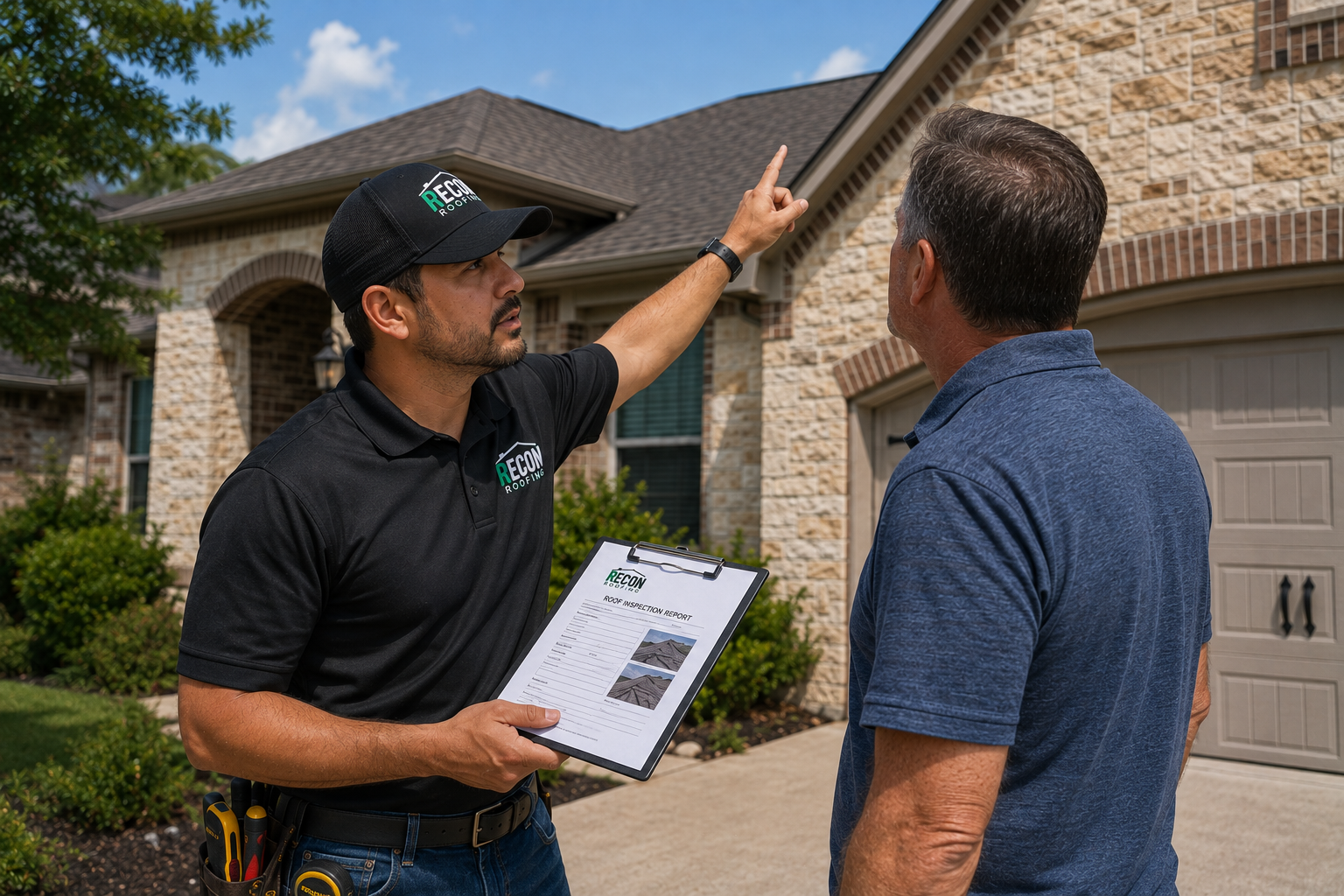
Recon Roofing does free hail damage inspections across Leander, Cedar Park, Round Rock, Georgetown, Liberty Hill, Lago Vista, Pflugerville, and the rest of the Central Texas I-35 corridor.
We get on your roof, check every component, document what we find with photos and measurements, and give you a written report. If there is no damage, we tell you. If there is damage, we walk you through the insurance process step by step.
No pressure, no sales tactics, no upsell.
Schedule your free hail damage inspection and find out what your roof actually looks like.
Need help with your roof?
Text us for a free estimate. No pressure, no sales pitch.