
Recon Roofing Texas
Attic Ventilation
A hot attic takes years off a roof from the inside. We install balanced ventilation that lets the heat out and keeps your shingles from cooking.
Heat Ruins a Roof From Underneath
Everyone worries about the sun hitting the shingles. The bigger problem in Central Texas is the attic below them. Trapped heat bakes the asphalt from the back side, dries out the oils that keep a shingle flexible, and ages the roof faster than the weather on top of it does. A poorly vented attic can take years off a roof that was installed correctly with good material.
The part people miss
Everyone worries about sun on the shingles. The bigger problem here is the attic below them, baking the asphalt from the back side.
Signs Your Attic Is Not Venting Properly
You can catch most of these without going on the roof.
- Shingles curling on a roof too young for it
- An upstairs that never gets comfortable
- An attic still baking well into the evening
- Rusted nail tips poking through the decking
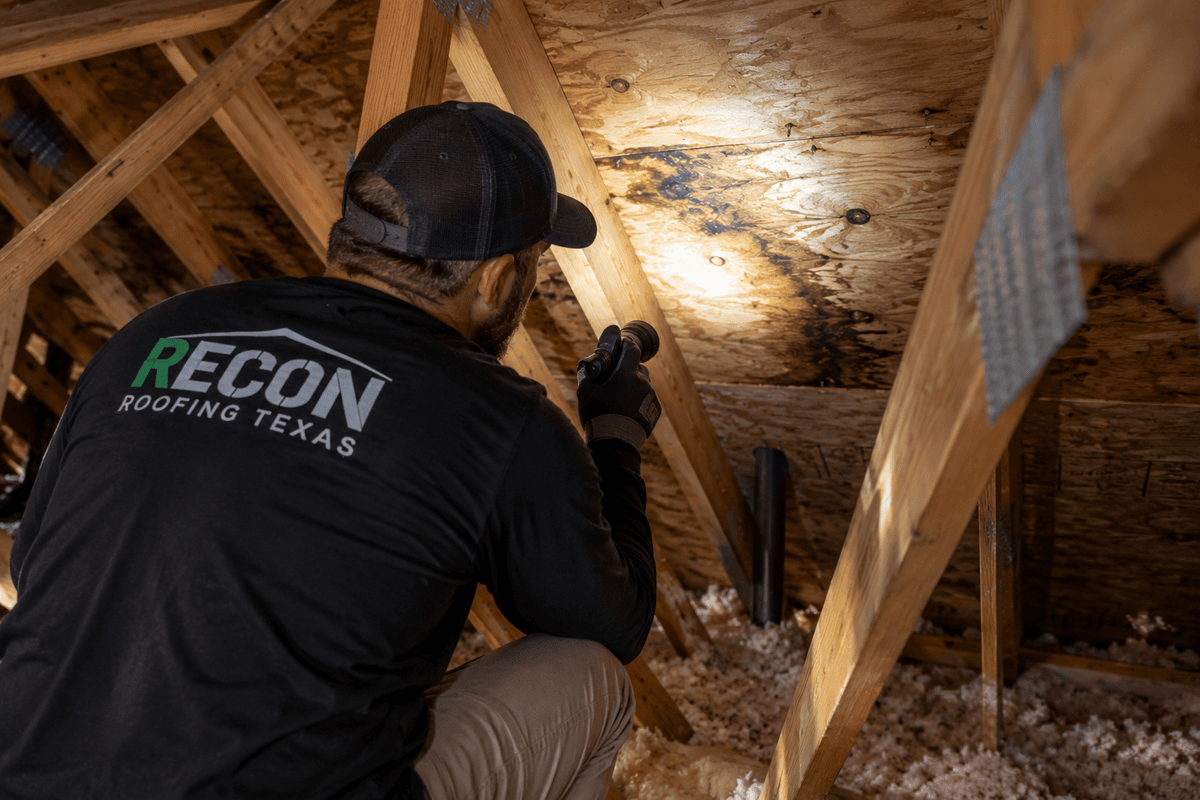
- Dark staining on the underside of the plywood
Balanced Means Intake and Exhaust
Adding vents at the ridge does nothing if air cannot get in at the eaves. A balanced system pulls cool air through soffit vents at the bottom and pushes hot air out at or near the ridge. When the intake is blocked by insulation or was never there to begin with, ridge and box vents just pull conditioned air out of your house instead, and you pay for that twice.
How Much Ventilation a Roof Needs
The industry standard is one square foot of net free ventilation area for every 300 square feet of attic floor when intake and exhaust are balanced, and one to 150 when they are not. Most homes we look at are short on intake rather than exhaust. We measure your attic rather than guessing from the driveway, and we tell you the number we are working from.
The ratio
One square foot of net free ventilation per 300 square feet of attic floor when intake and exhaust are balanced, and one to 150 when they are not. Most homes we see are short on intake, not exhaust.
What We Install
Which one fits depends on your roof line and how much attic sits under it. We work that out on the roof, not from the driveway.
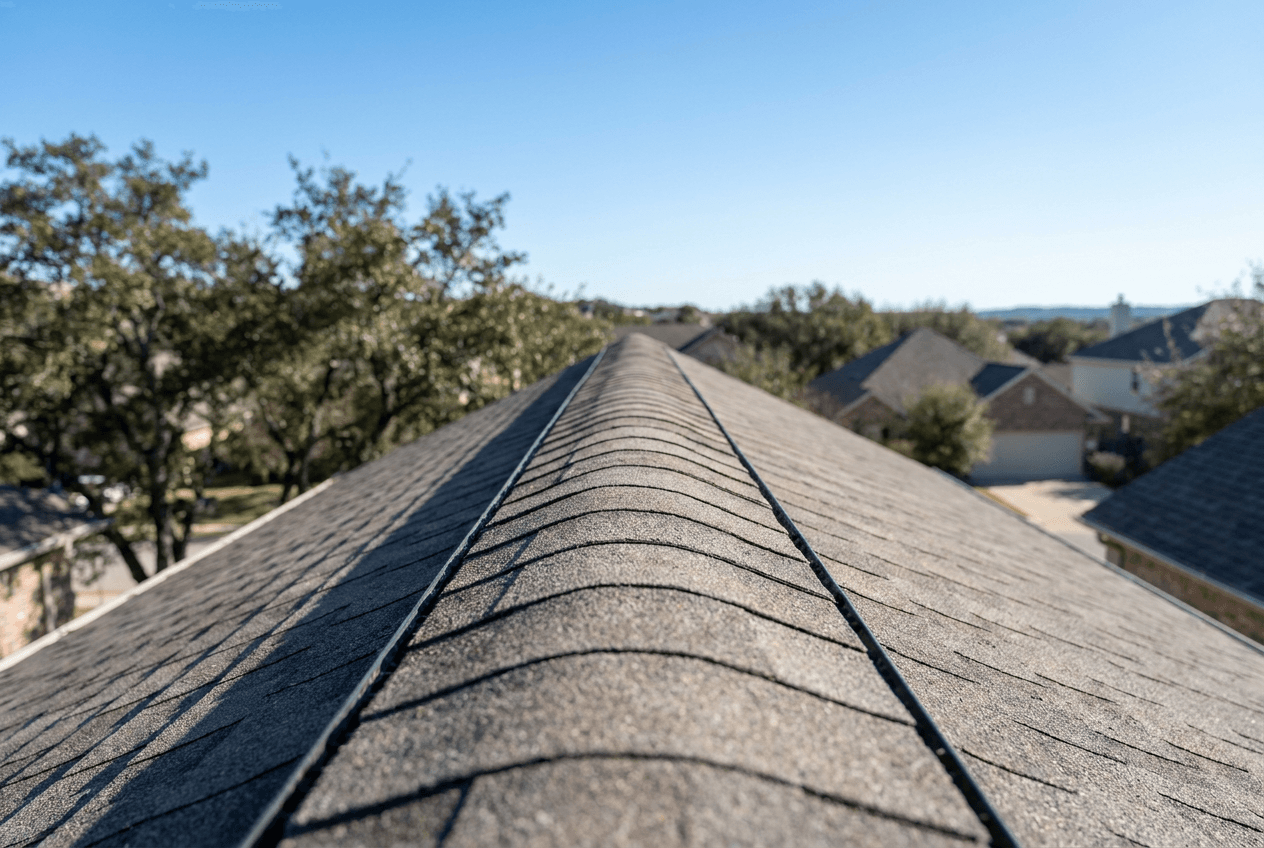
- Ridge vents
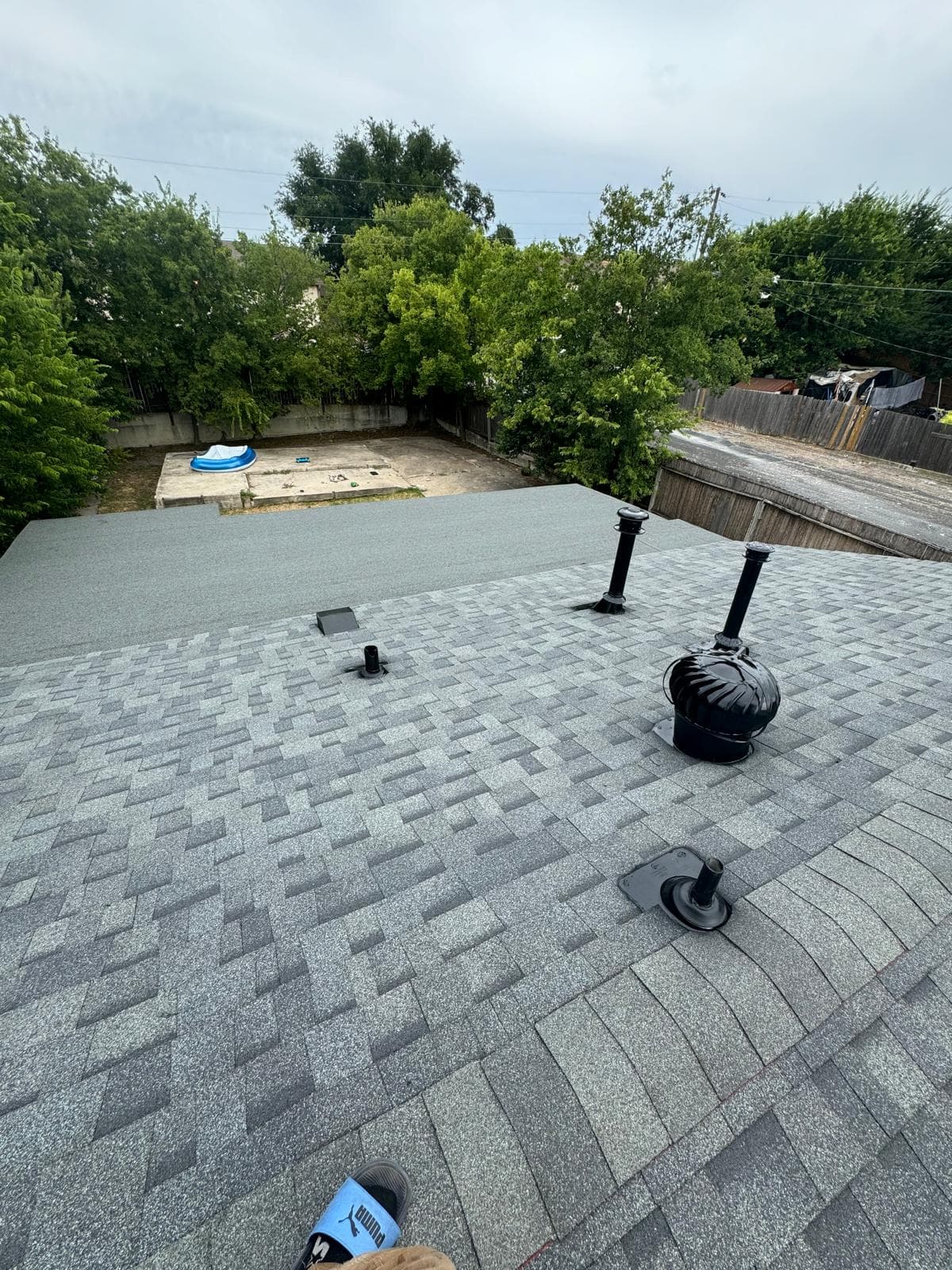
- Box vents and turbines
- Soffit and eave intake vents
- Bathroom exhaust reroutes, for fans dumping into the attic
It Shows Up on Your Power Bill
An attic running 150 degrees in August pushes that heat down through the ceiling, and your air conditioner fights it all afternoon. Ventilation will not halve your bill, and anyone promising that is selling something. It does take real load off a system that already works hard here.
Ventilation Affects Your Shingle Warranty
Most manufacturers require adequate attic ventilation as a condition of their shingle warranty. Skip it to save a few hundred dollars on a roof replacement and you can end up with no coverage on a defect claim years later. We install ventilation as part of every replacement for that reason, not as an upsell at the end.
Worth knowing before you save money
Most manufacturers require adequate ventilation as a condition of coverage. Skip it on a replacement and you can end up with no warranty on a defect claim years later.
We Check It on Every Inspection
Ventilation is part of the free roof inspection whether you called about it or not. If yours is fine, we say so and move on. If it is the reason your shingles are curling on a nine year old roof in Leander or Cedar Park, you should know that before somebody sells you a new roof that will do the exact same thing in another nine years.
What's included
- Ridge vent installation
- Box and turbine vents
- Soffit and eave intake vents
- Blocked intake diagnosis
- Attic temperature and moisture check
- Bathroom exhaust venting corrections
- Included in every free roof inspection
- Installed with every roof replacement
Free estimate
Text us your address and we'll set up a time to take a look. No obligation.
Vent Types We Install
| Vent | What It Does | Best For |
|---|---|---|
| Ridge vent | Continuous exhaust along the peak | Most homes with a long straight ridge |
| Box vent | Static exhaust in the upper third of the roof | Cut-up roof lines with short ridges |
| Turbine | Wind-driven exhaust, higher volume | Large attics where wind is reliable |
| Soffit vent | Intake at the eave, feeds everything above | Every roof. Most homes here are short on intake. |
These are the vent types we install most often. Every roof line is different and some homes need a mix or something not listed here, so if you are not sure what yours needs, Tell us what you are looking for.
Common Questions
How do I know if my attic ventilation is bad?
How much ventilation does my attic need?
Will attic ventilation lower my energy bill?
Ridge vent or turbines?
Does ventilation affect my shingle warranty?
Can you fix a bathroom fan that vents into the attic?
This service is available across our full service area: Leander, Cedar Park, Round Rock, Georgetown, Liberty Hill, Lago Vista, Pflugerville, Austin, and surrounding Central Texas cities from Killeen to San Marcos.
View full service area