
July 21, 2026
How Long Does a Roof Last in Texas? What the Heat Really Does to Shingles
Somebody sold you a 30 year roof. Then a roofer knocked on your door at year 17 and told you it was shot. One of them is wrong. Here is which one, and why.
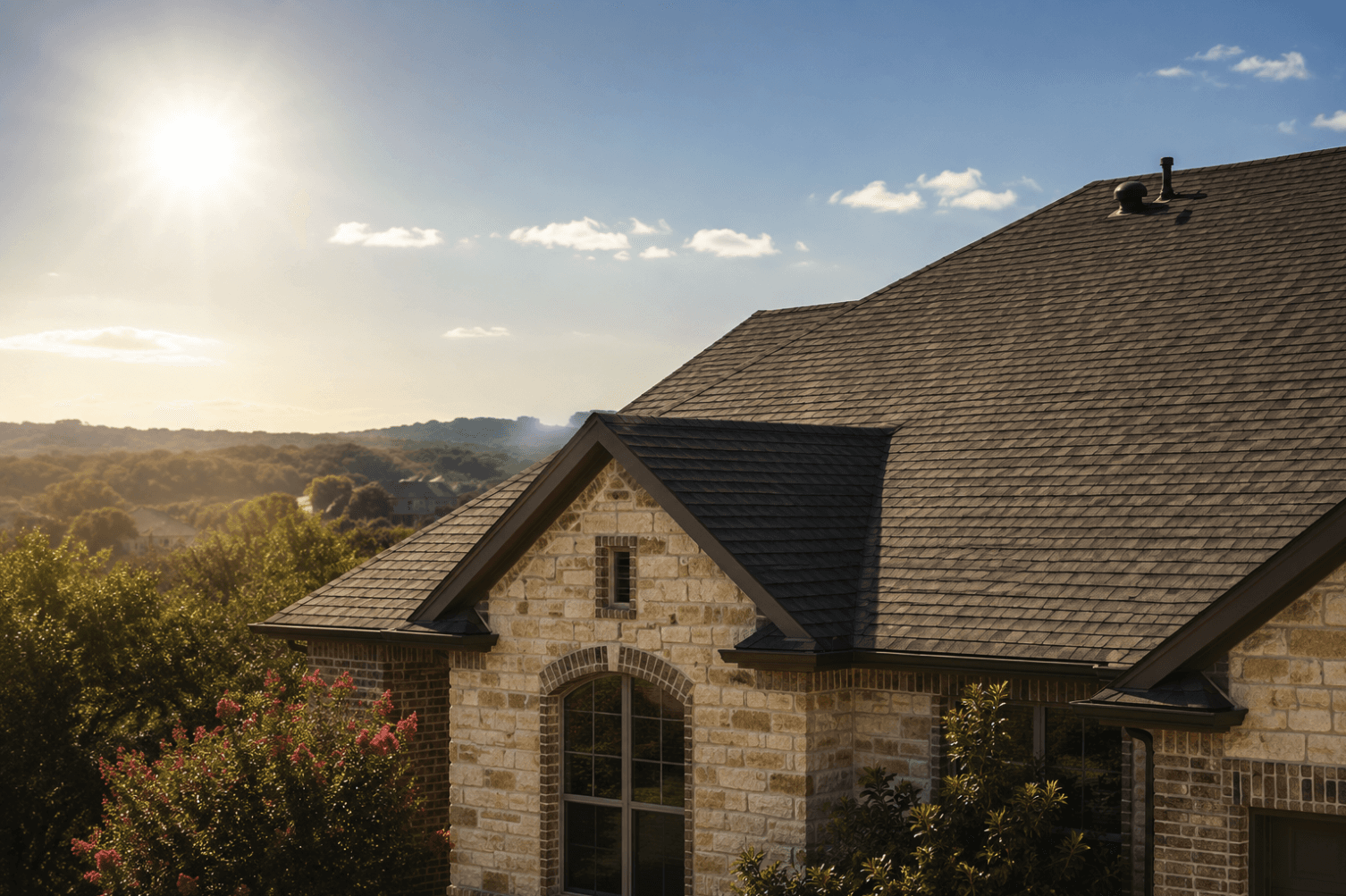
Somebody sold you a 30 year roof. Then a roofer knocked on your door at year 17 and told you it was shot.
One of them is wrong. Here is which one, and why.
The Short Answer
Nationally, an asphalt shingle roof is expected to last 20 to 30 years.
In Central Texas, plan on the low end of that. Sometimes below it.
We are not saying that to sell you a roof. We are saying it because the heat here does specific, measurable things to asphalt, and the number printed on the wrapper was never a promise about Leander in August.
Here is what actually happens up there.
How Long Each Roofing Material Lasts
Start with the national baselines:
- Asphalt shingles: 20 to 30 years
- Metal: 30 to 50 years
- Wood shakes and shingles: 25 to 50 years
- Clay or concrete tile: 50 to 100 years
- Slate: 60 to 150 years
Two things to keep in mind when you read a list like that.
First, those are national averages across every climate in the country. A shingle roof in Portland and a shingle roof in Pflugerville are not living the same life.
Second, the gap between materials gets wider in a hot climate, not narrower. Heat is hard on asphalt. It is much less hard on steel and tile. That is a real part of the metal roofing argument here, and it is worth running the numbers on if you plan to stay in the house.
Why the Number on the Wrapper Is Not a Forecast
Almost nobody reads their shingle warranty. Everybody quotes the number on the front of it.
A shingle warranty is a product defect warranty. It is not a prediction of how long your roof will work. Those are two entirely different things, and the marketing blurs them on purpose.
Look at what a real one says. GAF's shingle and accessory limited warranty defines "Lifetime" as "as long as you, the original owner(s)... own the property where the shingles are installed." So the day you sell the house, lifetime ends.
It gets more specific than that. There is a non-prorated window at the beginning called the Smart Choice Protection Period. After that window closes, any remedy "will be reduced to reflect the use you have received." Translation: at year 18 of a 30 year warranty, a defect claim pays a fraction of what a new roof costs.
And it excludes things. That same warranty does not cover damage from "inadequate ventilation." It also does not cover hail, wind or improper installation.
None of that makes the warranty worthless. It makes it a warranty and not a forecast. Read yours. Know which one you are holding.
What the Texas Heat Actually Does to a Shingle
An asphalt shingle is a fiberglass mat, saturated with asphalt, covered in ceramic granules. Every part of that sandwich reacts to heat.
Central Texas gives it plenty. On the 1991 to 2020 climate normals, Austin averages 29 days a year at or above 100 degrees, 123 days at or above 90, and 209 days at or above 80. The average August high is 98.
That is the air temperature. Your roof runs far hotter than the air. On a clear July afternoon a dark shingle surface can sit well above 150 degrees.
Here is what that heat does.
The Volatiles Bake Out
Asphalt contains volatile oils. Heat drives them off. InterNACHI, the home inspector association, puts it plainly: darker roofs "absorb more heat, which shortens shingle lifespan by accelerating the loss of volatiles."
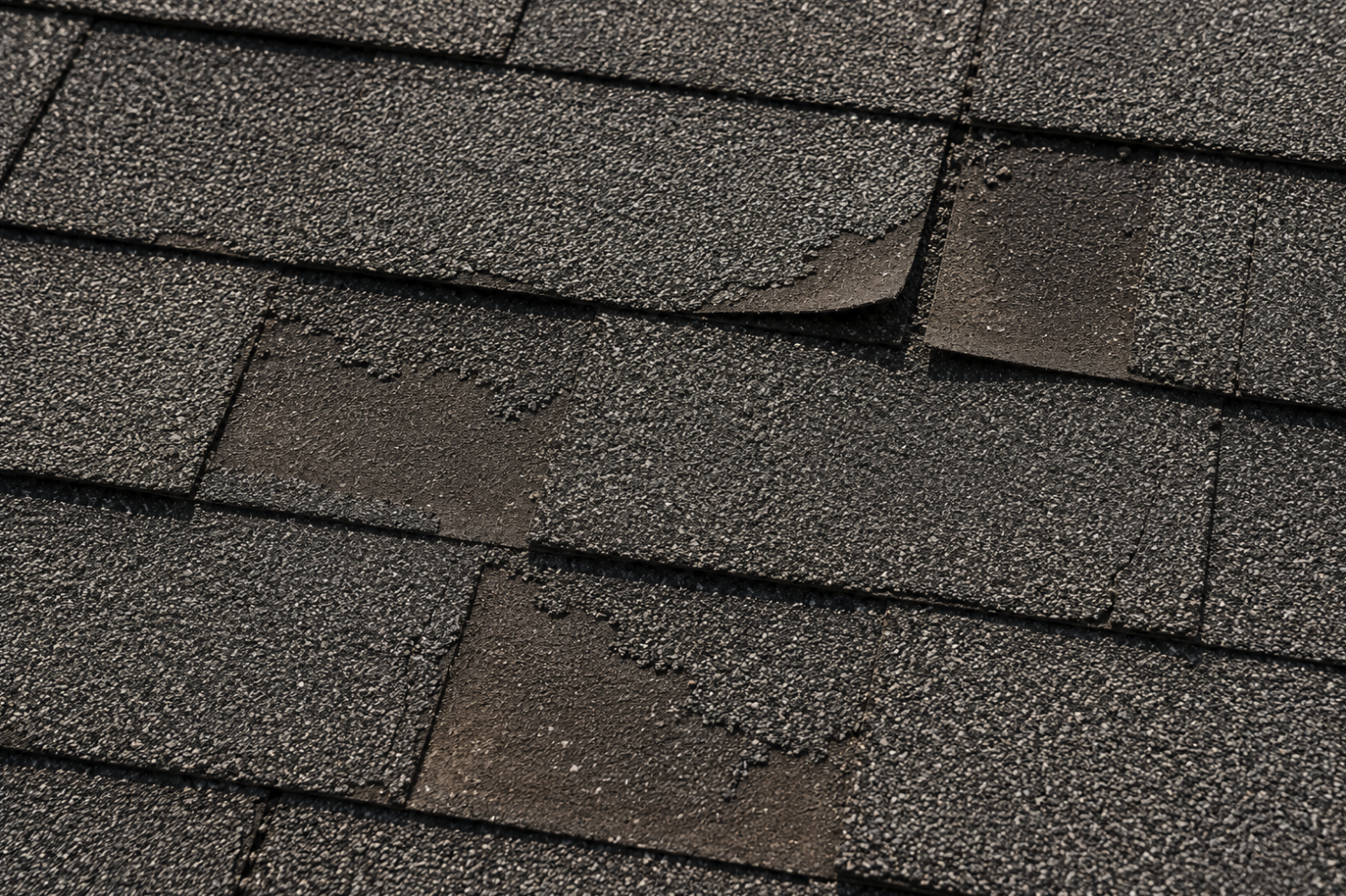
As those oils leave, the shingle gets brittle. Brittle shingles crack. They also start absorbing moisture, which leads to what InterNACHI calls "an increase in the rate of both uniform and localized granule loss."
That is why you find granules in the gutter. It is not dirt. It is your roof leaving.
Thermal Cycling Works It Loose
Heat is one problem. The daily swing is another.
Your roof expands all day and contracts all night, every day, for twenty years. InterNACHI notes that "climates with large daily temperature swings shorten roof lifespans" by increasing the rate of deterioration.
Central Texas has a real daily swing, especially in spring and fall. Add the shock of a summer thunderstorm dumping cold rain on a roof that has been baking since sunrise, and you get a lot of movement in a material that would rather sit still.
Color Matters More Than People Expect
A dark roof runs hotter than a light one, and it is not a small difference. That is the same InterNACHI point from above, and it is the one homeowners have the most control over.
Nobody in Williamson County is putting a white roof on a two story colonial. But there is real range inside the normal color palette. If you are choosing shingles right now, a lighter weathered wood carries less heat load than a black onyx. Manufacturers publish solar reflectance numbers for their color lines. Ask to see them.
Not Every Slope Ages the Same
Go look at your roof from the street, then walk around back.
The south and west facing slopes almost always look older. InterNACHI confirms the reason: "South-facing roof slopes have shorter lifespans due to increased thermal cycling and UV exposure."
This matters when a roofer tells you your roof is fine because they looked at the north side. It also matters when you are trying to judge your own roof from the driveway. Check the side that takes the sun.
The Thing That Shortens a Roof Faster Than the Weather
We have spent this whole article on heat, because heat is what makes Texas different. But if we are being straight with you, the fastest way to kill a roof has nothing to do with the climate.
It is a bad install.
A roof put on wrong fails early no matter what the weather does. Nails driven too high miss the nailing strip and the shingle above never seals down. Nails driven too deep cut through the mat. Too few nails per shingle and the wind takes them. Reused flashing leaks at the chimney. Skipped starter strip at the eaves and the first row lifts.
None of that shows up in year one. It shows up in year eight, when a roof with fifteen years left in it starts coming apart, and by then the company that installed it is usually gone.
This is also why a manufacturer warranty is thinner protection than people assume. Improper installation is excluded from it. If the install caused the failure, the shingle maker is not paying, and your only recourse is the roofer's workmanship warranty.
The Ventilation Question, Answered Honestly
Every roofer in Texas will tell you attic ventilation extends the life of your roof. We want to give you a more careful version, because the oversell on this one is real.
Ventilation is not a magic life extender for the shingles themselves. Direct sun, air temperature and shingle color drive surface temperature far more than airflow underneath does. If somebody tells you a ridge vent will add ten years to your shingles, be skeptical.
Here is why we still care about it a great deal.
A hot, humid, poorly vented attic damages the deck your shingles are nailed to. It cooks your HVAC equipment and your energy bill. And it can cost you your coverage, because inadequate ventilation is written into the exclusions of most shingle warranties, including the GAF language above.
Ventilation protects everything around the shingle and it keeps your warranty intact. That is enough reason to get it right without pretending it does more than it does.
How to Tell How Much Life Your Roof Has Left
You do not need to climb up there. Most of this is visible from the ground with a phone camera zoomed in, or from inside the attic with a flashlight.
Look for granules in the gutters and at the bottom of the downspouts. A handful after a new install is normal. A steady accumulation on a fifteen year old roof is not.
Look for shingles curling at the corners or cupping in the middle. That is the brittleness we talked about, showing up where you can see it.
Look for bald patches where the granules are gone and the asphalt underneath looks shiny or black. Those spots are taking direct UV with nothing protecting them.
Look for cracking that runs across the face of a shingle rather than along an edge. That is age, not damage.
Go in the attic on a sunny day with the lights off. Daylight through the deck is a real problem. Dark staining on the underside of the plywood means moisture, and moisture is aging your roof from below.
If two or three of those show up together, get a professional roof inspection and get the findings in writing with photos. Guessing from the driveway only takes you so far.
Is a 20 Year Old Roof Too Old?
For keeping water out, maybe not. We have seen twenty year old roofs in Georgetown that were installed well, vented properly and still had a few honest years left in them.
For your insurance company, twenty is old. Sometimes fifteen is old.
That is the part most homeowners do not find out until the worst possible moment, so it gets its own section.
Why Your Insurance Company Cares About Your Roof's Age More Than You Do
Roof age has quietly become an insurance issue in Texas, not just a maintenance issue.
Carriers here have been tightening up. Some change how they cover an older roof at renewal. Some will not write it at all.
Look at one carrier's published Texas underwriting guidelines. Homeowners of America lists composition roofs as ineligible when they are older than 15 years with windstorm coverage included, or older than 20 years with windstorm excluded. Older roofs may still be accepted, but at actual cash value and subject to underwriting approval.
Then there is the roof payment schedule, which is showing up on more Texas policies every year. Instead of paying full replacement cost, the policy pays a declining percentage based on the age of the roof. A common structure pays 100 percent in the first five years, then steps down every five years after that, until a roof past twenty is covered at a fraction of what it costs to replace.
Run that math on a hail claim. A roof that would cost $15,000 to replace, on a policy paying 40 percent at year seventeen, gets you $6,000 before your deductible comes out. You write a check for the rest.
Every carrier is different and these rules change. Do not take our word for any of it. Pull out your declarations page and call your agent. Ask three questions. Is my roof covered at replacement cost or actual cash value? Is there a roof payment schedule on this policy? At what roof age does my coverage change?
If the answers are bad, that changes the math on replacing a roof that still technically works. A roof at year fourteen with a marginal insurance situation is a different decision than a roof at year fourteen with full replacement cost coverage.
How to Get More Years Out of the Roof You Have
If your roof is sound, you do not need to replace it. You need to stop shortening it.
Keep the gutters clear so water is not backing up under the shingles at the eaves. Trim the branches rubbing the roof and dropping debris on it. Get the ventilation checked and corrected if it is wrong, both for the deck and for the warranty.
Fix small things while they are small. A cracked pipe boot is a cheap repair and a slow leak. Left alone it becomes rotten decking, which is a much more expensive conversation.
And get eyes on it after storms. Central Texas gets hail in the spring and again in the fall, and damage that goes undocumented for two years usually goes uncovered too.
None of that turns a 20 year roof into a 30 year roof. It does keep a 20 year roof from dying at 14.
How Old Is Your Roof, Really?
Everything in this article turns on one number, and most homeowners do not actually know theirs. They know roughly. Roughly is not good enough when your carrier is asking.
Four ways to pin it down, cheapest first.
Start with your closing documents. The seller's disclosure notice usually lists the age of the roof, and if it was replaced before you bought, there is often a receipt or a transferred warranty in the file.
Next, check city permit records. Georgetown requires a permit for a re-roof, so a permitted job there leaves a dated public record you can pull. Round Rock and Cedar Park do not require one for a standard re-roof, so this only works in some of our cities.
Third, ask the previous owner or the neighbors. In a subdivision where a hail storm took out a whole street at once, the neighbors often remember the year better than the paperwork does.
Last, a roofer can lift a shingle and read the manufacturer date code stamped on the back, or estimate the age from wear patterns and the shingle line itself. Product lines get discontinued, and that narrows the window.
Write the number down and keep it with your insurance paperwork. It is the single most useful fact you can have about your own roof.
Find Out How Much Life You Have Left
Recon Roofing is veteran owned and based in Leander. We cover Cedar Park, Round Rock, Georgetown, Liberty Hill and Pflugerville, and we have run the same crews under the same owner for years.
An inspection from us answers the question this whole article is about. You get our read on the condition, our best estimate of the age, and how many years we think are left, in writing with photos. It costs nothing and there is no obligation attached to it.
Plenty of the roofs we look at are not ready to be replaced. When that is the answer, that is the answer we give.
Schedule your free roof inspection and stop guessing.
Need help with your roof?
Text us for a free estimate. No pressure, no sales pitch.