
August 4, 2026
How Much Does a Roof Replacement Cost in Central Texas? (2026 Pricing)
What a new roof really costs in Central Texas in 2026. Honest ranges, local factors that move the price, and how to compare bids.
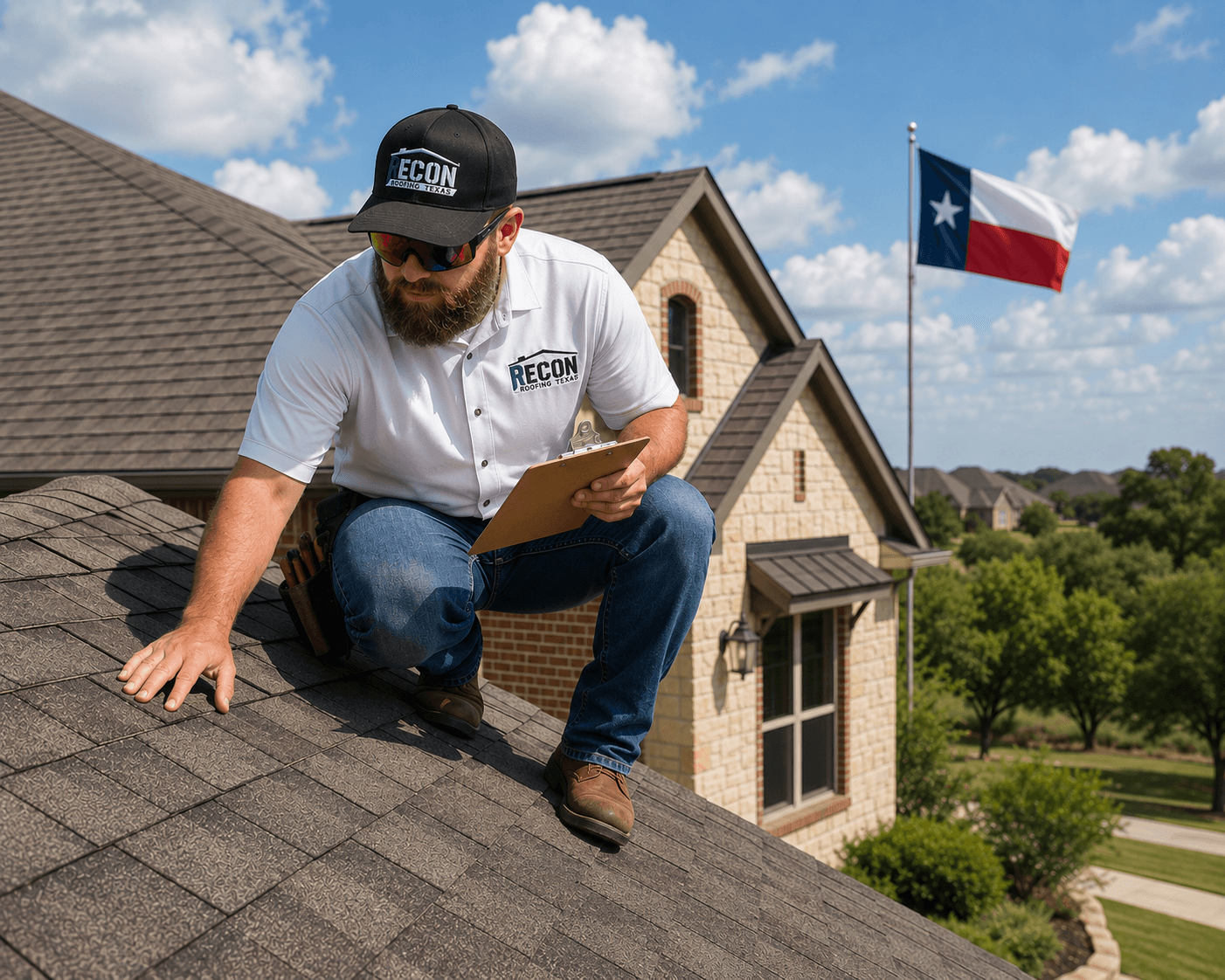
Nobody wants to buy a roof. You buy one because you have to, and then you spend a week trying to figure out whether the number you were handed is fair.
So here is the honest version. No fine print, no bait number designed to get you on the phone.
The Short Answer
Most Central Texas homeowners replacing an asphalt shingle roof in 2026 are looking at somewhere between $8,000 and $20,000. A smaller, simpler roof can land under that. A big two story with a steep pitch, or an upgrade to metal or tile, can go well over it.
That range lines up with the published data. Fixr puts the Texas average between $6,000 and $20,000, with a typical 2,000 square foot roof around $12,000. HomeAdvisor lands in the same neighborhood, listing a Texas typical range of $6,000 to $20,000 and an average near $13,000 for that same size. Nationally, Angi reports an average around $9,600 and a per square foot range of $4 to $11.
Those are real numbers from sources that do not sell roofs. We are pointing you to them on purpose. A roofing company quoting its own average is not evidence of anything.
Here is the part most cost articles skip. That spread is not random. Two houses on the same street can be $9,000 apart, and there are specific reasons why. Once you understand them, you can read your own estimate and tell whether it makes sense.
Why Roofers Talk in "Squares"
A roofing square is 100 square feet. It is the unit the entire industry prices in, and it is the first thing to look for on your estimate.
Your roof is bigger than your house. A 2,000 square foot home usually has closer to 2,400 or 2,600 square feet of roof once you account for pitch and overhangs. That is roughly 24 to 26 squares.
If a bid does not tell you how many squares it covers, you cannot compare it to anything. Ask. Any honest roofer will tell you without hesitating, because they measured it before they wrote the number.
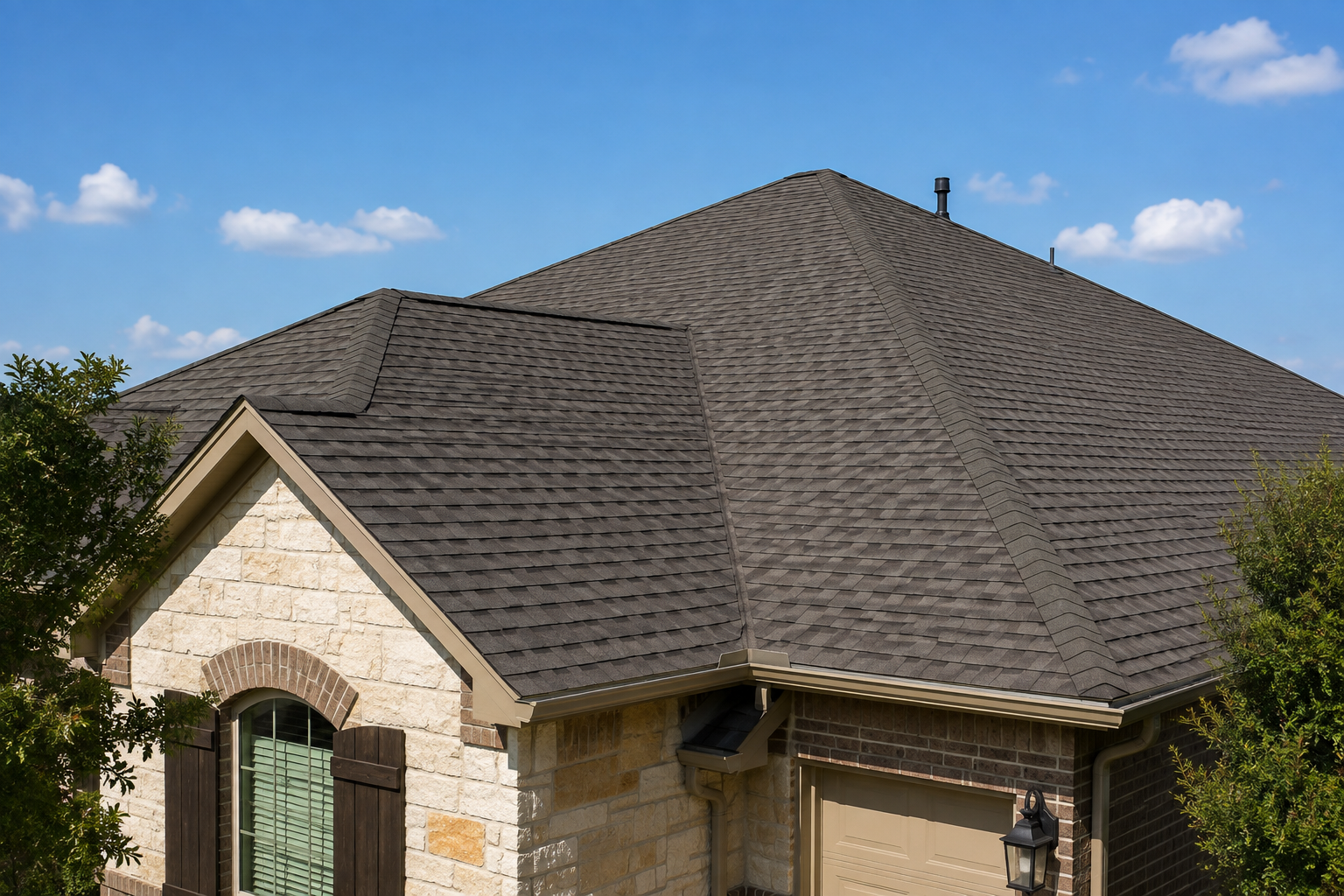
What Actually Drives Your Number
Roof Size, Not House Size
This is the biggest single factor. More squares means more material, more labor, more dump fees. HomeAdvisor's Texas figures show the scale clearly: about $3,000 to $10,000 for a 1,000 square foot roof, $6,000 to $20,000 at 2,000 square feet, and $11,250 to $37,500 at 3,750 square feet.
Pitch and Complexity
A steep roof costs more than a walkable one. Crews move slower. Safety equipment comes out. Material waste goes up.
Complexity does the same thing. Every valley, dormer, chimney, skylight and roof-to-wall intersection is a place water wants to get in. Each one needs flashing, and flashing is careful hand work. A simple gable roof and a cut-up roof of the same size are not the same job.
If you have a big second story with multiple gables, expect to be on the higher end of any range you read. That describes a lot of newer construction in Leander, Liberty Hill and north Round Rock.
Material
This is the choice with the widest swing, and we cover it in its own section below.
Tear-Off and How Many Layers You Have
The old roof has to come off, get loaded, and get hauled to a landfill. RoofingCalculator puts tear-off at roughly $0.40 to $2.00 per square foot depending on the material coming off.
If you have two layers of shingles up there, that is double the tear-off and double the disposal. Some older Central Texas homes have a second layer that a previous owner added instead of doing it right. You find out on day one.
Decking
This is the one that surprises people, so we want to be direct about it.
Decking is the plywood or OSB under your shingles. Nobody can see it until the old roof is off. If some of it is rotten, usually from an old leak or bad ventilation, it has to be replaced before anything goes back down. Fixr puts decking replacement around $2 to $8 per square foot.
No roofer can quote your decking accurately before tear-off. Anyone who says they can is either guessing or padding. What a good roofer can do is tell you their per sheet price in writing, before you sign, so there is no argument on day two. Ask for that number. If they will not give it to you, that tells you something.
The Small Line Items That Are Not Optional
Drip edge, underlayment, ice and water shield in the valleys, pipe boots, ridge vent, starter strip. None of it is glamorous. All of it is where roofs actually fail.
Fixr prices ice and water shield underlayment at roughly $0.50 per square foot. It is a small line on a big estimate. It is also the difference between a valley that holds and one that does not.
Some of it is code, not preference. Round Rock, for instance, requires drip edge under the 2015 IBC even though it does not require a permit for a residential re-roof. If a bid is dramatically cheaper than the others, this is usually where the money went missing.
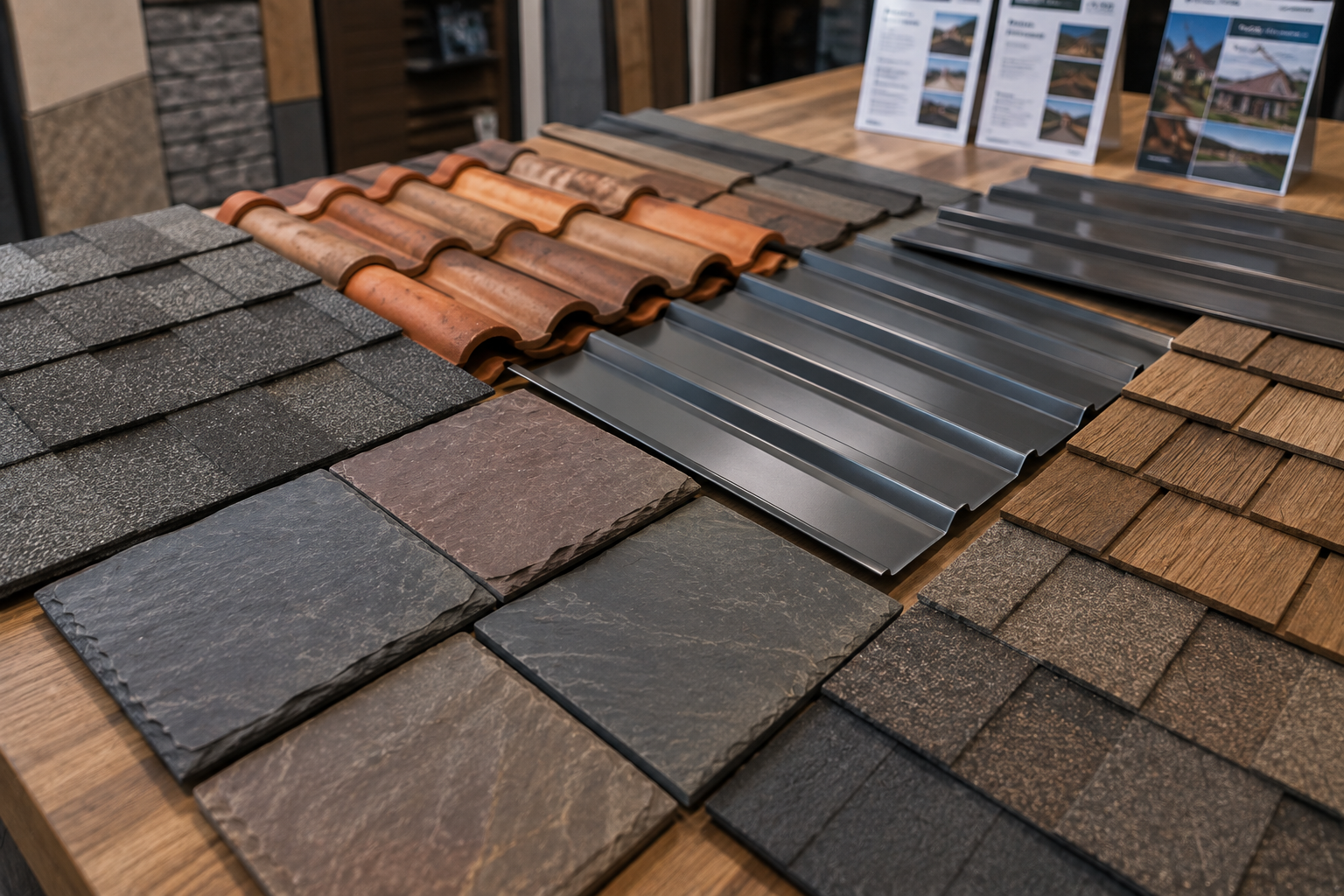
Cost by Roofing Material in Texas
Material is where the range really opens up. These are per square foot installed ranges from Fixr's Texas cost guide:
- Asphalt shingles (3-tab): $2.50 to $4
- Architectural shingles: $4.50 to $7.50
- Wood shakes: $5 to $10
- Metal: $6.50 to $18
- Concrete tile: $7 to $10
- Clay tile: $10 to $26
- Slate: $15 to $30
Skip 3-tab. It is the cheapest thing on the shelf and it is the first thing hail takes apart. The money you save is not worth what you give up. Architectural shingles cost more and last longer, and almost every roof going on in Williamson County right now is architectural for good reason.
Metal is a real option here, not a luxury. The upfront cost is higher. But a standing seam roof can outlast two or three shingle roofs, and it handles our summers better. If you plan to stay in the house fifteen years or more, run the math before you dismiss it.
Tile is mostly a replacement decision, not a new one. If you already have tile, you are usually repairing or replacing in kind. Very few Central Texas homeowners switch to tile at those prices.
Three Things That Make Central Texas Different
Most cost articles you will find are written for the whole country. Here is what actually applies to your house.
1. The Heat Is Working Against You
That 30 year shingle wrapper is a warranty term, not a forecast. It assumes a moderate climate.
Central Texas is not moderate. We get months of direct sun, surface temperatures that climb far above the air temperature, and daily heating and cooling that works the material loose over time. In our experience, asphalt roofs here tend to age faster than the number on the box suggests.
This matters for your budget in a specific way. If you are pricing a roof for a house you bought fifteen years ago, do not assume you have another decade. Get it looked at.
It also makes attic ventilation a real cost consideration and not an upsell. A hot, poorly vented attic cooks the shingles from underneath. Skipping ventilation to save a few hundred dollars can shorten the life of a roof you just paid five figures for. It can also void a manufacturer warranty.
2. Hail Changes What You Should Buy
Texas leads the country in hail. According to the Insurance Information Institute, Texas recorded 902 major hail events in 2025, more than double the next state on the list.
That is the argument for impact resistant shingles, usually called Class 4. They are tested under UL Standard 2218, and the Texas Department of Insurance confirms that roofing materials rated Class 1 through Class 4 may qualify for a discount on your homeowners policy, with Class 4 earning the highest credit.
Two things worth being straight about.
First, the discount is not standardized. TDI notes that "the amount of discount for each class of roofing material is established by the insurance company on a company-by-company basis." Call your agent and get your number before you decide. Do not take a roofer's word for what your carrier will do.
Second, a Class 4 rating is a lab result, not a guarantee. The Insurance Institute for Business & Home Safety is careful about this, noting that impact tests "do not exactly replicate natural hailstone impacts" and are best used to compare products against each other. Class 4 is a better shingle. It is not a force field.
Even so, in a market that got 902 hail events in a single year, the upgrade usually pencils out. Add the material upcharge, subtract the annual premium credit, and see how many years it takes to break even. For a lot of homeowners here, it is faster than they expect.
3. Permits Are Not the Same in Every City Here
This one genuinely varies inside our service area, and almost nobody tells you.
Georgetown requires a permit. The city states that "a permit is required for a new roof or re-roof for Residential or Commercial properties within the City Limits of Georgetown," and lists the fee at $60. Contractors have to be registered with the city first.
Round Rock does not. The city says plainly that it "does not require a permit for a residential re-roof", though you still have to meet code, and a permit is needed if you are changing the roof structure.
Cedar Park does not either. The city lists "Roof Covering (non-structural)" under projects that do not require a permit.
For Leander, Liberty Hill and Pflugerville, call the city before you assume. Requirements change, and we would rather you verify than take our word for it. Nationally, Fixr puts building permits at $400 to $1,000, which is far above what Williamson County cities actually charge. That gap is a good example of why national cost data only gets you so far.
Georgetown has one more rule worth knowing before you budget. The city requires a full tear-off in several situations. One is when the old roof is water soaked or falling apart. Another is when it is wood shake, slate, clay or cement tile. The third is "when the existing roof has two or more layers of any type of roofing."
So if you have two layers, a Georgetown job is going to cost more than the same house in Cedar Park.
When Insurance Is Paying, the Math Changes Completely
A lot of roofs in Central Texas get replaced through a storm claim, not out of pocket. If that is your situation, the number you care about is not the total cost. It is your deductible.
A few things to understand before you start.
Most Texas homeowners policies carry a separate wind and hail deductible, and it is often a percentage of your dwelling coverage rather than a flat dollar amount. On a $400,000 dwelling limit, a 2% wind and hail deductible is $8,000. Read your declarations page. That number surprises people.
Whether your policy pays actual cash value or replacement cost also matters a great deal. Actual cash value subtracts depreciation for the age of your roof. Replacement cost policies typically pay the depreciation back after the work is finished. Same roof, same damage, very different out of pocket.
And this one is not optional. You have to pay your deductible. Texas Insurance Code Section 707.002 says so directly. The insured "shall pay any deductible applicable to a first-party claim made under the policy."
It goes further than that. Under Texas Business and Commerce Code Section 27.02, a contractor who offers to pay, waive, absorb or rebate your deductible is committing a Class B misdemeanor.
So if someone knocks on your door after a storm and offers to cover your deductible, you have learned everything you need to know about that company. Send them on.
We can walk you through what we find on your roof and document it thoroughly. Your carrier decides the claim, and your agent is the right person to talk to about coverage and deductibles.
How to Compare Three Bids Without Getting Fooled
Get three estimates. Then put them side by side and check the same eight lines on each one.
- Squares. How many? If two bids disagree by more than a square or two, somebody measured wrong.
- Layers and tear-off. Is full tear-off included, or is somebody planning to shingle over?
- Material and rating. Brand, line, and whether it is Class 4. "Architectural shingles" is not a spec.
- Decking allowance. How many sheets included, and the price per sheet after that.
- Underlayment. Felt or synthetic. Ice and water shield in the valleys or not.
- Flashing and drip edge. New or reused. Reusing old flashing is where cheap bids get cheap.
- Ventilation. What is going back on, and does it meet the manufacturer's requirement.
- Warranty. Two separate things: the manufacturer's material warranty and the roofer's workmanship warranty. Get both in writing, with a length.
Nine times out of ten, three bids that looked $4,000 apart are actually pricing three different jobs. Once you line up the specs, the gap usually shrinks a lot.
Why the Cheapest Bid Is Usually the Most Expensive One
A roof is mostly labor and material. Neither one is secret. When a bid comes in far below the others, the money came out of somewhere.
Usually it is one of these. Cheaper shingles. Reused flashing. Felt instead of synthetic. No ice and water shield. Skipped ventilation. No permit where one is required. Or a crew that is not carrying workers' compensation, which becomes your problem if somebody gets hurt on your property.
Ask every roofer for a certificate of insurance, general liability and workers' comp, sent directly from their agent. Not a photocopy from a truck. It takes them one phone call and it protects you completely.
What We Would Tell You if You Called Us Today
If your roof is under fifteen years old and you do not have a leak, you probably do not need a roof. You may need a repair, and we will tell you that.
If you took hail and you have not filed yet, get the roof documented before you do anything else. Photos, measurements, a written report.
If you have three bids and they are all over the place, bring them to us and we will help you read them. Even if you hire somebody else. A homeowner who understands what they are buying is good for this whole industry.
And if you are just trying to plan ahead, budget in the range at the top of this article, then add a little for decking. Almost every roof needs a few sheets.
Get a Straight Answer About Your Roof
We are a veteran owned roofing company based in Leander, and we work across Cedar Park, Round Rock, Georgetown, Liberty Hill and Pflugerville. Same owner, same crews, for years.
Our roof inspections are free, and they come with a written report and photos whether you hire us or not. If your roof has ten good years left, we will say so. That is the whole business model.
Schedule your free roof inspection and find out what you are actually dealing with.
Need help with your roof?
Text us for a free estimate. No pressure, no sales pitch.