
July 7, 2026
5 Things to Check on Your Roof Before Storm Season in Central Texas
What to check on your roof before the next Central Texas storm. A quick walkthrough that could save you thousands.
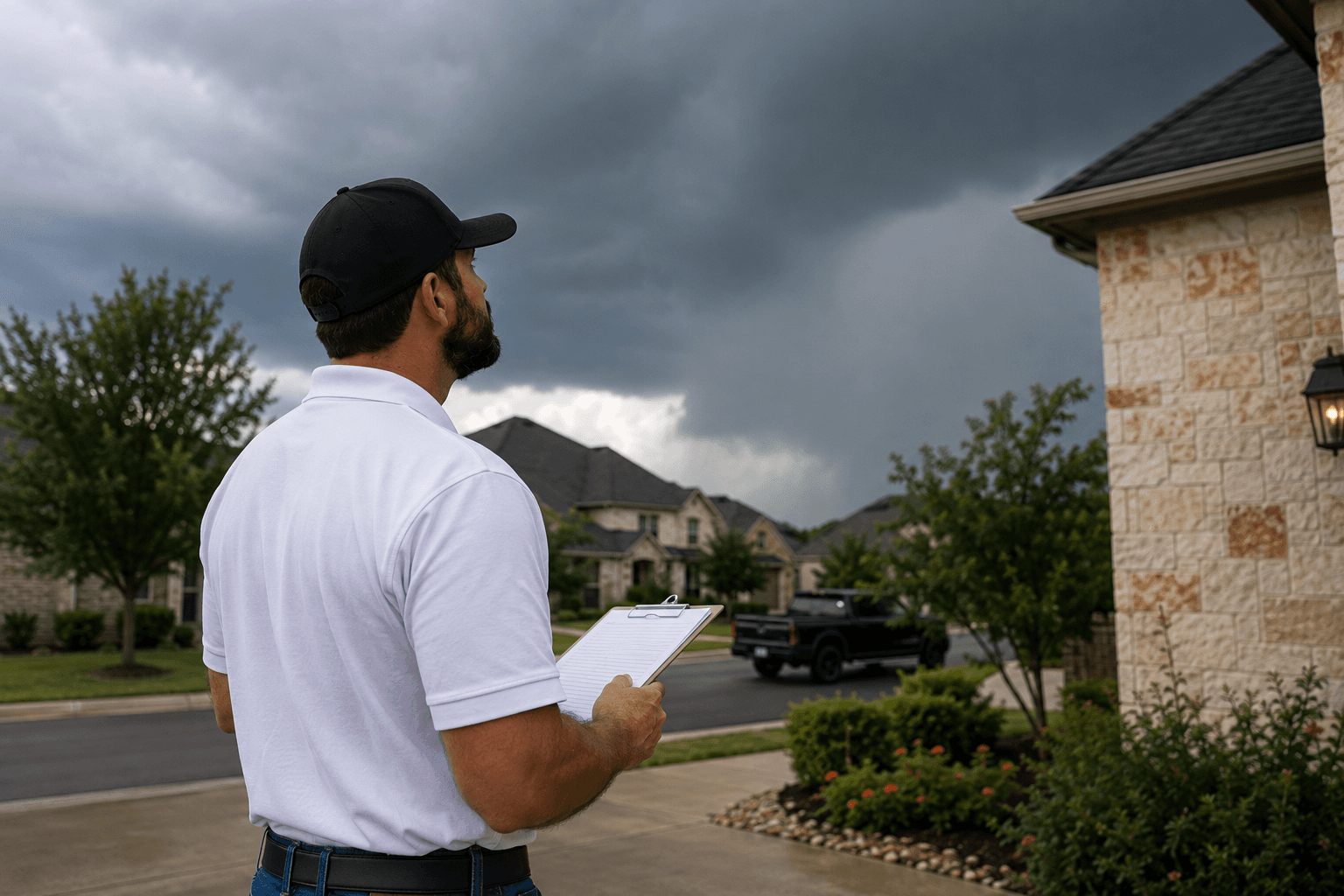
Central Texas storm season runs from about March through June. Sometimes later. The Insurance Information Institute reports that Texas leads the nation in hail events, recording 902 major hail events in 2025 alone. The I-35 corridor from Killeen to San Marcos takes the worst of it.
Most of the roof damage we repair at Recon Roofing could have been caught before the storm hit. Not fixed, necessarily. But caught, documented, and either repaired cheaply or filed with insurance in time. The homeowners who check their roofs in February are in a much better position than the ones calling us in April with water in their living room.
Here are five things worth 20 minutes of your time before the weather turns.
1. Look at Your Shingles From the Ground
You do not need to get on the roof. That is what we are for. But you can learn a lot with a pair of binoculars or your phone camera zoomed in.
You are looking for shingles that are curling at the edges. Cracked or split shingles. Missing shingles. Dark patches where the granules have worn off and the black asphalt is showing through. Anything that looks buckled or lifted instead of lying flat.
If your roof is over 15 years old, these problems are more common. Central Texas heat ages asphalt shingles faster than the warranty number on the box suggests. According to Fixr's Texas roofing guide, the average asphalt shingle roof lasts 15 to 30 years depending on the material grade and local climate. A shingle that is already compromised is the first thing a hailstone takes apart.
One more thing to look for: granules in your gutters. If you clean your gutters out and there is a pile of gritty, sand-like material at the bottom, that came off your shingles. A little is normal on a new roof. A lot means the shingles are breaking down. The Asphalt Roofing Manufacturers Association lists excessive granule loss as one of the top signs a roof needs attention.
2. Clean Out Your Gutters
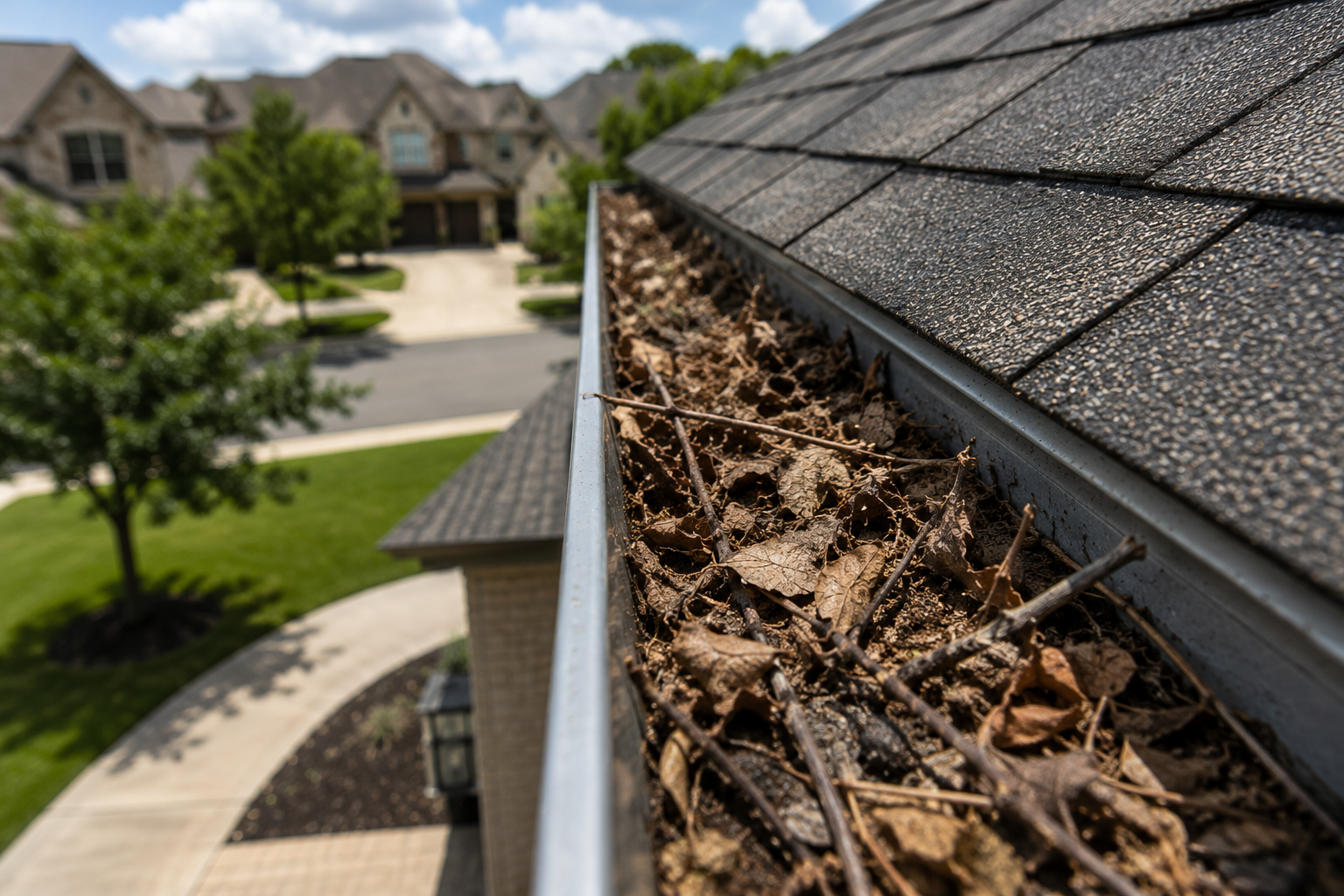
This one sounds like maintenance, not storm prep. It is both.
When gutters are clogged, water cannot drain off the roof. During a heavy Central Texas downpour, that water backs up under the shingles, gets behind the fascia board, and soaks into the soffit. That leads to rot. The National Roofing Contractors Association says homeowner maintenance should mean checking the roof in the fall and the spring and clearing the gutters of dead leaves and debris, and you will need to do it more often than that if you have overhanging trees.
One blocked downspout can redirect hundreds of gallons of water into places it was never supposed to go. Pull the leaves out, flush the downspouts with a hose, and make sure water is flowing away from your foundation. If you have trees overhanging the roof, this is a twice-a-year job at minimum.
The other reason to clean your gutters before storm season: if you end up filing an insurance claim, an adjuster who sees clogged gutters and fascia rot is going to ask whether the damage was storm-related or maintenance-related. You do not want that conversation.
3. Check the Flashing Around Your Chimney and Vents
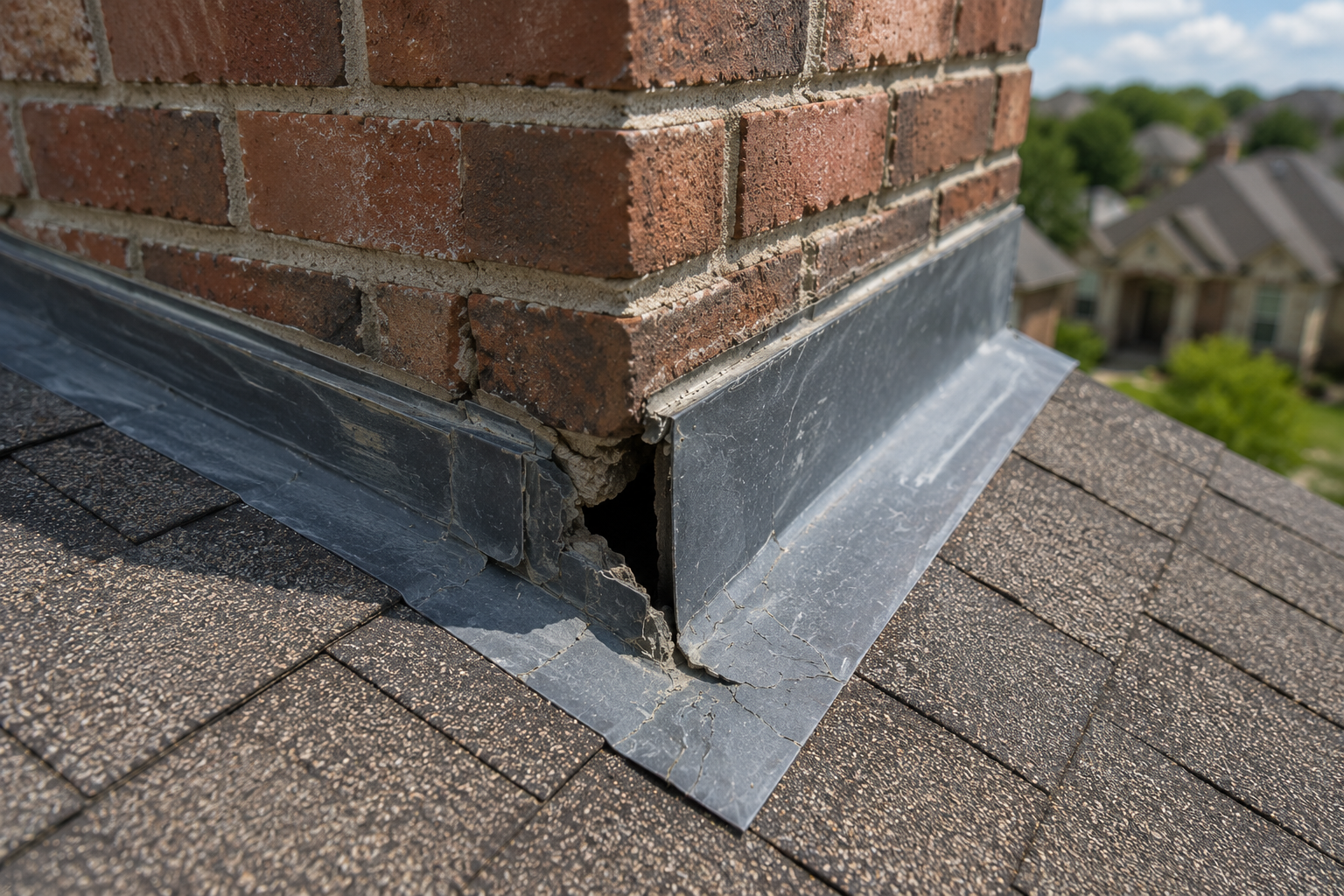
Flashing is the metal sealed around anything that sticks up through your roof. Chimneys, vent pipes, skylights, roof-to-wall intersections. It is the most leak-prone part of any roof, and it is where storms do some of their quietest damage.
Here is what happens. The sealant around flashing cracks over time from sun exposure and thermal cycling. The metal can pull away from the surface just enough to let water in. You might not notice it until a heavy rain pushes water through the gap and it shows up as a stain on your ceiling.
You can sometimes see lifted edges or cracked caulk from the ground, especially around a chimney. If the caulk looks dried out, crumbly, or is missing in spots, that flashing needs attention before it rains.
Fixr estimates flashing repair at $200 to $600 depending on the location and extent of the damage. That is a fraction of what water damage costs when a bad flashing joint goes unrepaired through a full storm season. This is one of the most common repairs we do in Leander and Cedar Park.
4. Look in Your Attic
Most people never go up there, which is exactly why problems hide there for years.
Take a flashlight and look at the underside of the roof deck. You are looking for three things. Daylight coming through anywhere, which means you have a hole. Water stains or dark spots on the plywood, which means something is already leaking. And any signs of mold or mildew, which means moisture is getting trapped.
Pay extra attention around vent penetrations and where the roof meets a wall. Those are the same spots where flashing fails on the outside.
If you see active wet spots or fresh staining, something is leaking right now. A storm will make it dramatically worse. Get it looked at before that happens.
One more thing while you are up there: check your insulation and ventilation. The Asphalt Roofing Manufacturers Association recommends a balanced attic ventilation system, with intake at the eaves matched at or near the ridge, to keep moisture from building up and to hold down cooling costs. A hot, poorly vented attic cooks the shingles from underneath and can cut years off your roof's life. Skipping ventilation to save a few hundred dollars can also void a manufacturer warranty, something most homeowners do not realize until it is too late.
5. Trim the Branches Hanging Over Your Roof
Central Texas wind during a thunderstorm can snap a dead branch and drop it right through your shingles. We have seen it happen on jobs in Round Rock and Georgetown where a single branch punched through the decking.
Even branches that do not break cause problems. They scrape back and forth across the shingles as they blow around, grinding the granules off over time. That is the same granule loss that hail causes, just slower.
The International Association of Certified Home Inspectors recommends keeping tree limbs at least six feet from the roof surface. Cut back anything within that range. Dead branches are the priority, but even healthy ones that are rubbing against the roof need to go.
While you are out there, look at the valleys where two roof slopes meet. That is where water concentrates during rain, and trapped leaves and debris make it worse. Clear the valleys so water has a clean path to the gutters.
When to Call a Roofer
If you spotted any of these problems, or if your roof is more than 15 years old and has not been inspected, get someone up there before storm season starts.
A 20-minute roof inspection can find a $200 flashing repair before it becomes a $10,000 water damage job. We have seen that math play out too many times.
It also gives you documentation. If a storm does hit and you need to file a claim, having a pre-storm inspection on file makes the process cleaner. Your adjuster can see what was there before and what the storm did. That is a stronger claim. The Texas Department of Insurance recommends documenting your property condition before storm season for exactly this reason.
Get Your Roof Checked Before the Next Storm
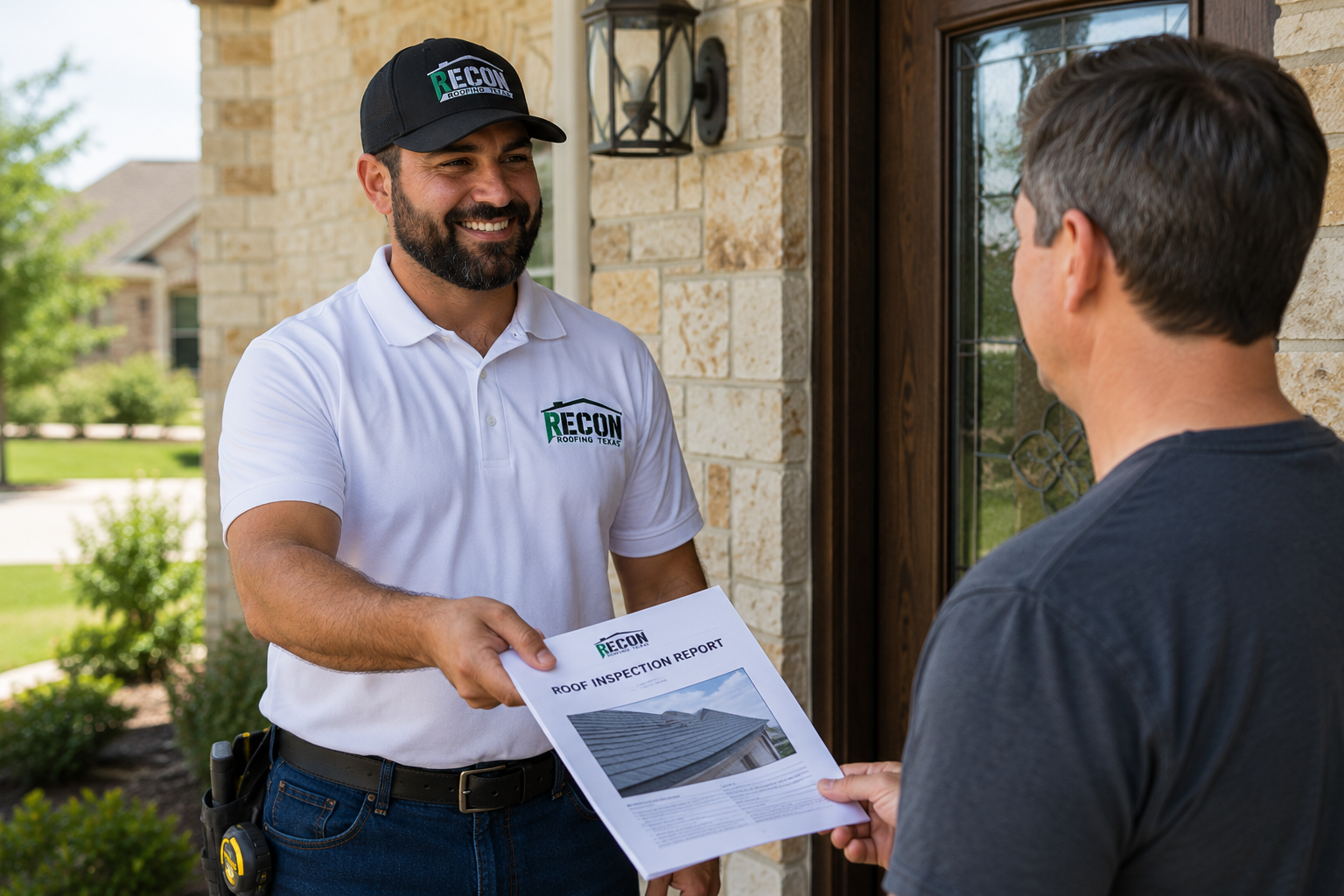
Recon Roofing does free pre-storm roof inspections across Leander, Cedar Park, Round Rock, Georgetown, Liberty Hill, Lago Vista, Pflugerville, and the rest of the Central Texas I-35 corridor.
We get on your roof, check every component, take photos, and give you a written report. If everything looks good, we tell you. If something needs attention, we tell you what it is, what it costs, and how urgent it is. No pressure, no upsell.
Schedule your free roof inspection before storm season and find out where you stand.
Need help with your roof?
Text us for a free estimate. No pressure, no sales pitch.