
August 20, 2026
How to Choose a Roofing Contractor in Central Texas: 10 Questions That Weed Out the Bad Ones
Texas does not license roofers. Here are 10 questions that separate a real roofing company from a truck and a phone number.
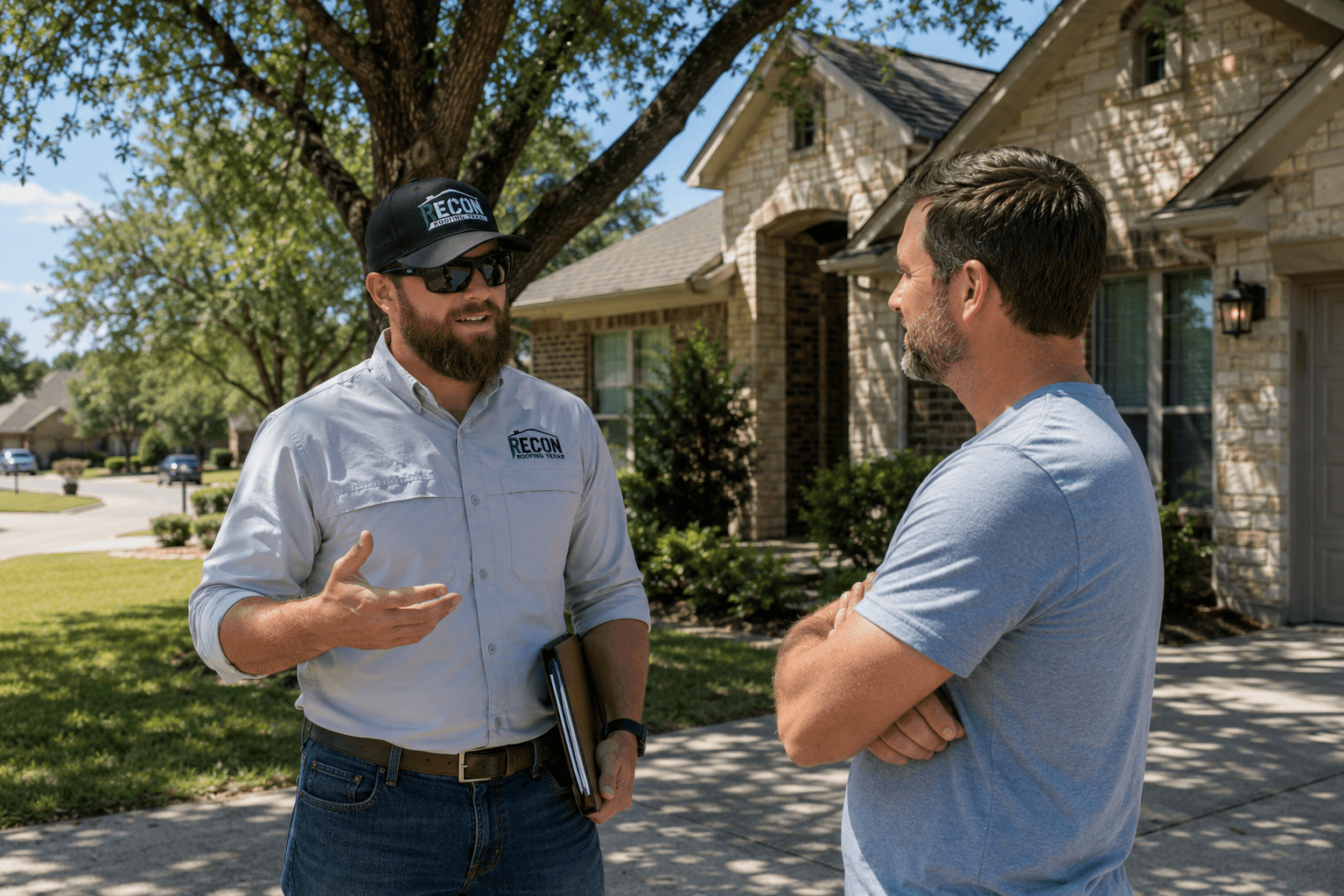
Start with the thing almost nobody tells you. Texas does not license roofers.
Not in Leander, not in Austin, not anywhere in the state. The Roofing Contractors Association of Texas says it plainly: "Texas does not require roofing contractors to hold a state-issued roofing license." The Texas Department of Licensing and Regulation does not administer one either.
RCAT runs a voluntary program with exams, insurance documentation and continuing education. It is worth something. But it is optional, most roofers in this market do not have it, and RCAT itself is careful to say the credential "does not guarantee a contractor's work."
So there is no state agency standing between you and a bad roofer. Anybody with a truck, a ladder and a magnetic door sign can bid your house tomorrow.
That means the screening is your job. Here is how to do it in about fifteen minutes on the phone.
One assumption before we start. This article is about picking a contractor, not about whether you need one. If you are not certain your roof is actually finished, read how long a roof lasts in Texas first. Hiring the best roofer in Williamson County to replace a roof with eight good years left is still a bad outcome.
Where to Find Roofers Worth Calling
Before the questions, you need names. Where you get them matters more than most people think, because the sourcing does half the filtering for you.
Start with your neighbors, especially in a subdivision that took hail a few years back. Somebody on your street has been through this. Ask who they used, and more usefully, ask who they would not use again.
Check the manufacturer contractor locators. GAF, Owens Corning and CertainTeed all publish lists of contractors certified in their products. Certification is not a guarantee of anything, but it does require the company to be established enough to apply, carry insurance and stay in good standing. That alone screens out the truck-and-a-ladder operation.
Read reviews with your eyes open. Look at the timeline, not just the star count. A company with forty reviews that all landed in the same six weeks is buying them or just chased a storm into town. You want a steady trickle over several years, with photos, from named local neighborhoods. Read the two and three star reviews specifically. Every real company has a few, and how the owner responded tells you more than any five star review will.
Where not to start: whoever knocked on your door, and whoever is running the most ads. Neither is a signal of anything except marketing budget.
Three names is enough. Now start dialing.
The 10 Questions to Ask a Roofer
1. "Are You Licensed?"
This is a trick question, and it is the one most homeowners lead with.
Any roofer can say yes, because there is nothing to be licensed by. Some mean a city contractor registration. Some mean an RCAT credential. Some mean nothing at all and are counting on you not knowing the difference.
Ask the follow-up. Licensed by whom, and can you send me the number? A real answer names an issuer. A vague one tells you they were hoping the question would stop there.
City contractor registration is a real thing and worth asking about, but understand what it is. It usually means the company filed paperwork and paid a fee so the city will accept permits from them. It is a records requirement, not a skills test. Nobody watched them install a roof.
2. "Can Your Insurance Agent Email Me Your Certificates Directly?"
Not a PDF from their phone. Not a photocopy from the truck. From the agent, to you.
You want two things: general liability and workers' compensation. General liability covers damage to your property. The second one is bigger than most people realize, and it gets its own question.
This takes an honest roofer one phone call. If it turns into a problem, you have your answer.
3. "Do You Carry Workers' Compensation?"
This is the Texas question, and it is the one that can actually cost you money.
Texas does not require most private employers to carry workers' compensation insurance. That is unusual, and roofing is one of the more dangerous trades in the country. Plenty of roofing companies here operate without it.
If an uninsured worker falls off your roof, you may end up in the middle of that. Your homeowners policy may or may not want to be involved.
You do not have to take their word for it either. The Texas Department of Insurance will verify coverage for you. Email Coverage.Verification@tdi.texas.gov with the company name and address, or call 800-252-7031. They typically answer within one business day.
Fifteen minutes of work. Do it before anybody gets on a ladder.
4. "Will the Crew on My Roof Be Your Employees or a Sub Crew?"
There is nothing automatically wrong with subcontracted labor. Good companies use good subs.
What matters is whether the answer is straight, and whether the coverage from question three follows the people actually on your roof. A company that hires the cheapest available crew that week is a different company than one that runs the same guys year after year.
Ask how long they have worked with that crew. The pause before the answer tells you as much as the answer.
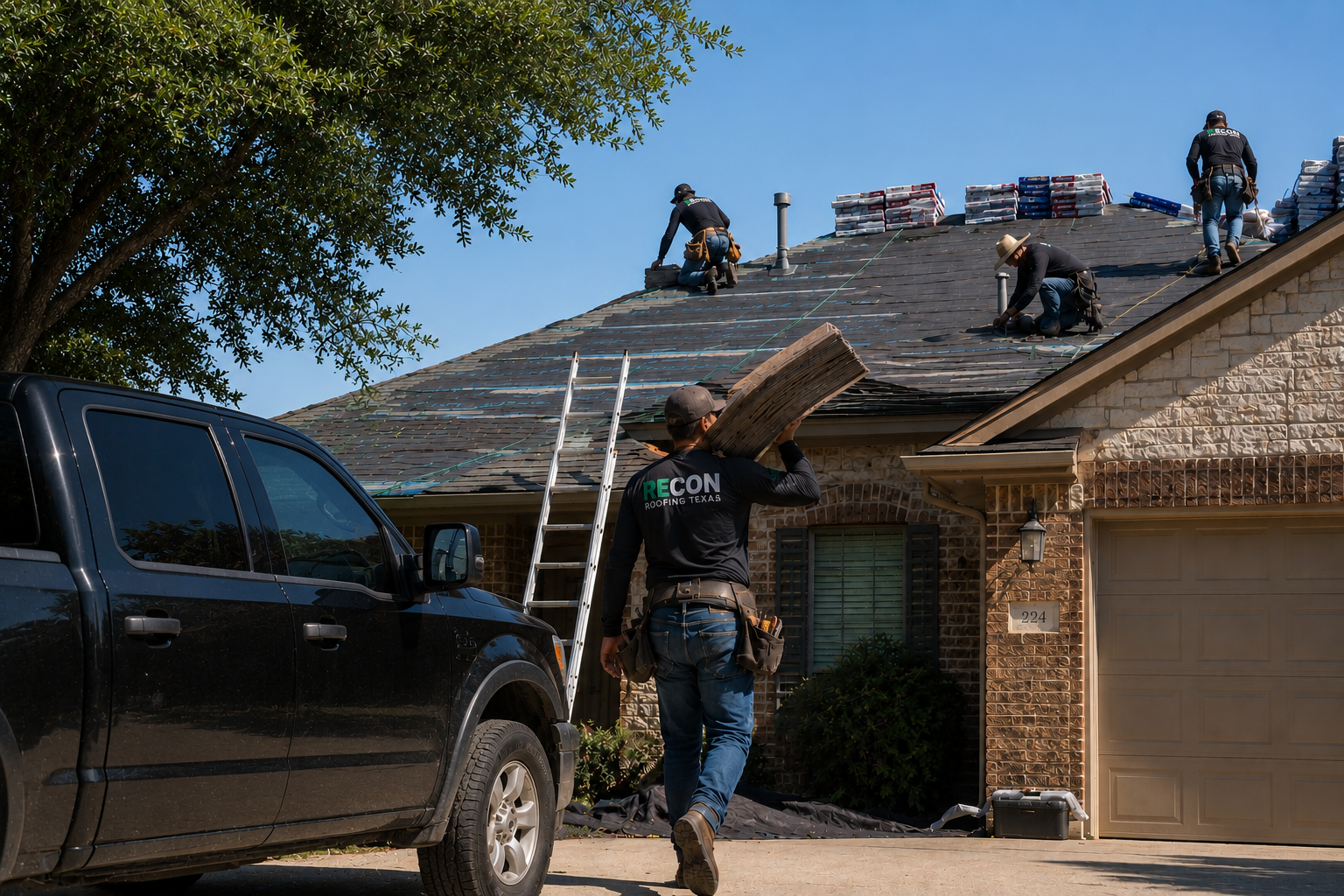
5. "What Is Your Price per Sheet if You Find Bad Decking?"
Nobody can see the decking until the old roof is off. Any roofer who quotes it up front is guessing.
What a good one can do is give you a number in writing before you sign. So many sheets included, this price per sheet after that.
This is the single most common source of mid-job billing disputes in this trade. Getting the number in writing costs you one sentence in the contract and prevents the whole argument. We go deeper on this and the other line items in our Central Texas roof replacement cost guide.
6. "What Is Your Workmanship Warranty, in Years, in Writing?"
There are two warranties on every roof and they are not the same thing.
The manufacturer warranty covers defects in the shingle. It does not cover installation. If a roof fails because it was nailed wrong, the shingle company is not paying.
The workmanship warranty is the roofer's own promise, and it is the one that covers the install. Ask for the length and ask to see the document. "We stand behind our work" is not a warranty. A number of years on paper is.
7. "Who Pulls the Permit?"
The answer depends on which city you live in, which is why this question is useful.
Georgetown requires a permit for a residential re-roof and requires contractors to register with the city first. Round Rock and Cedar Park do not require one for a standard re-roof. Other cities in our area vary.
A roofer who works here every week knows this without checking. One who says "you don't need a permit for a roof" as a blanket statement either has not worked in Georgetown or is not planning to pull one.
8. "What Happens With My Deductible?"
Ask it flat, and listen carefully.
The only correct answer is that you pay it. Texas law requires you to, and a contractor who offers to cover, waive or absorb it is committing a criminal offense. We covered exactly how that works in our cost guide.
Any version of "we'll take care of it" or "we'll work with you on that" is a company telling you it is comfortable breaking the law. Consider what else it is comfortable with, on your roof, where you cannot see.
9. "Can You Show Me Three Roofs You Did in My City in the Last Year?"
Not a portfolio. Not stock photography. Addresses in Leander, Cedar Park, Round Rock or wherever you live, from the last twelve months.
A company that works here can produce that in a minute. A company that follows storms across three states cannot, because they were in Oklahoma last spring.
Then actually drive by one. It takes ten minutes and it is the most underused step in this entire process.
10. "What Happens if I Call You in Four Years?"
This is the question nobody asks, and it is the one we would ask first.
A roof is not a transaction that ends at the final payment. Pipe boots crack. Storms come through. Something needs looking at.
You are trying to find out whether this company will exist and answer the phone. How long have they been at this address? Is there a local office you can drive to? What happens if the owner sells or retires?
A twenty year workmanship warranty from a company that has been in business eighteen months is a piece of paper, not a promise. A ten year warranty from a company that has worked the same six cities for a decade is worth more.
You are not buying shingles. Everybody buys shingles from the same place. You are buying whether somebody picks up in year four.
The Answers That Should End the Conversation
Some responses are disqualifying on their own. If you hear these, you are done.
They knocked on your door within a day or two of a storm and want a signature today. They offer to handle your deductible. They want a large deposit up front before any material is delivered. They cannot give you a physical local address. They ask you to sign something that assigns your insurance claim over to them. The price drops significantly the moment you hesitate. Or they will not put the estimate in writing with line items.
None of those are close calls. Any one of them is enough.
There is one more that is less obvious. Watch for the roofer who agrees with everything you say. If you tell them you think you have hail damage and they nod along without getting on the roof, they are not inspecting anything. They are qualifying you. A roofer who tells you your roof looks fine, or that you have a repair and not a replacement, just gave you information that cost them money. That is the behavior you are shopping for.
Two Texas Rules Worth Knowing Before You Sign
You Have Three Days to Cancel a Door-to-Door Contract
This one matters a great deal after a hail storm, when the trucks show up and the pressure starts.
The Texas Attorney General's office explains it: when a merchant solicits you somewhere other than their place of business and you agree to buy, "you have a right to cancel the sale within three business days."
The seller has to give you written notice of that right, including the date of sale and their name and address. If the conversation happened in Spanish, the contract has to be in Spanish. To cancel, you sign and date the notice of cancellation and mail it back, and the AG recommends certified mail so you have proof.
The AG's other advice is the best sentence in this whole article. "Always ask for a physical address and for references, and then take time to check the information."
Somebody You Never Hired Can Put a Lien on Your House
If your roofer does not pay their supplier or their sub crew, those companies can come after your property, not just after the roofer.
Texas Property Code Chapter 53 gives subcontractors and material suppliers lien rights on residential construction projects. There are notice requirements and homestead protections built in, and the rules are genuinely complicated. But the short version is that paying your contractor in full does not automatically mean you are clear.
The practical protection is simple. Do not pay large sums up front. Pay on progress and on completion. And on a bigger job, ask for lien waivers from the supplier and any subs before the final check clears.
What This Looks Like From Our Side of the Conversation
Here is something worth knowing about how a roofer hears these questions.
When a homeowner asks us for certificates from our agent, or asks what our decking price per sheet is, or asks who is actually going to be on the roof, we are not annoyed. We are relieved. It means the conversation is going to be about the work instead of about who can produce the lowest number.
The companies that get irritated by these questions are irritated for a reason. Their business model depends on you not asking.
So ask all ten. Ask us. Ask the other two bids. If we come out third on price and first on answers, that is a real conversation to have, and it is a better one than most homeowners get to have in this trade.
And if somebody answers all ten well and it is not us, hire them. You will have a good roof, which is the actual point.
Talk to a Roofer Who Expects These Questions
Recon Roofing is veteran owned and based in Leander. We cover Cedar Park, Round Rock, Georgetown, Liberty Hill and Pflugerville, and we have run the same crews under the same owner for years. There is a physical address and a local phone number, and we will still be here in year four.
Start with a free inspection. You get our findings in writing with photos, and no obligation attached to any of it. Bring your list of questions to that appointment.
Schedule your free roof inspection and put us through it.
Need help with your roof?
Text us for a free estimate. No pressure, no sales pitch.