
September 6, 2026
Roof Repair vs. Roof Replacement: How to Know Which One You Actually Need
Two roofers look at the same roof. One says it is a repair. One says you need a new roof. Both of them sound sure. Here is how to work out which one is right.
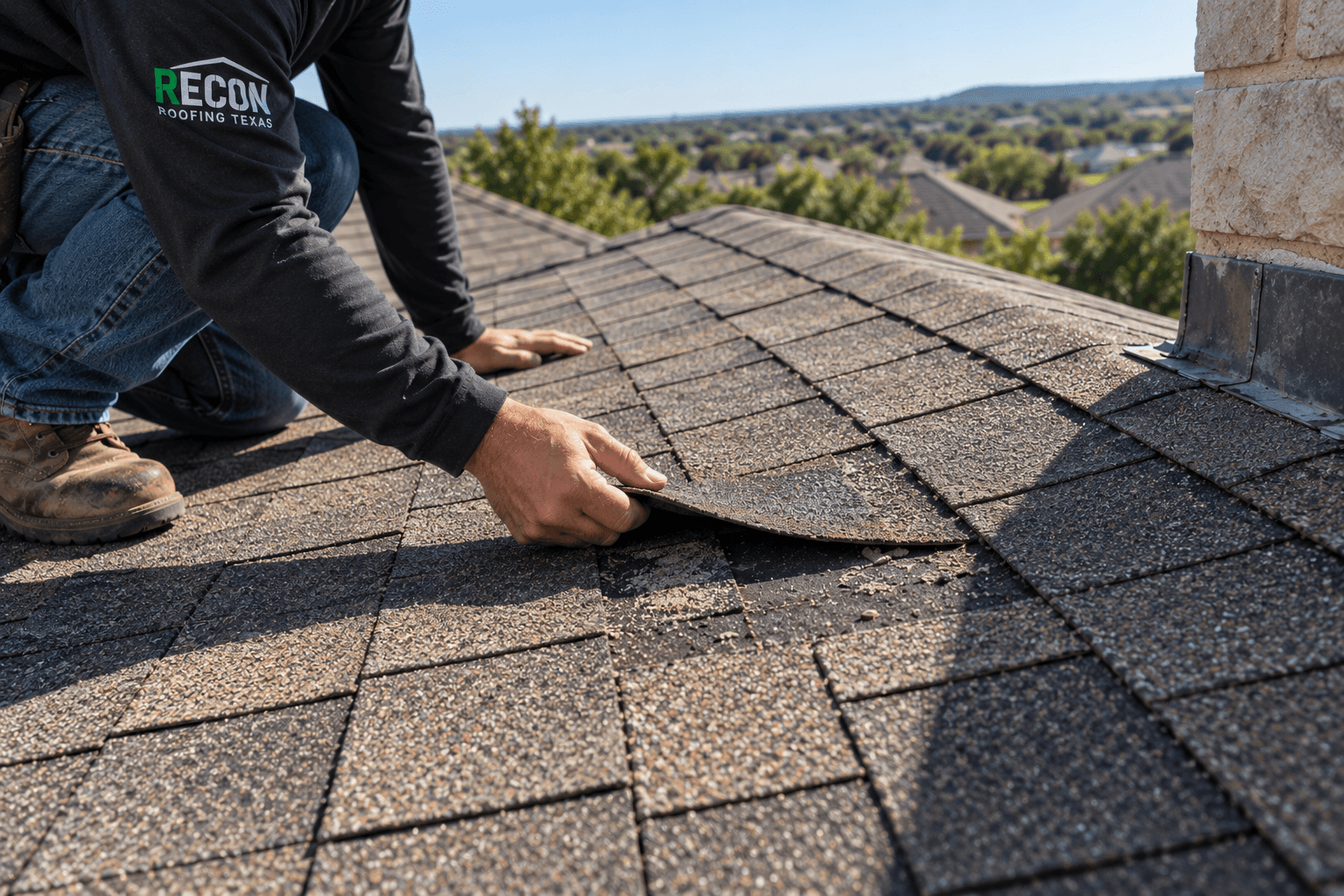
Two roofers look at the same roof. One says it is a repair. One says you need a new roof. Both of them sound sure.
Somebody is wrong, and it is expensive either way. Here is how to work it out yourself.
The Short Version
Repair when the damage is in one place, the roof still has years left, and the wood underneath is solid.
Replace when the problem shows up in more than one area, the roof is near the end of its life, or you have already paid to fix it once.
Most roofs are not close calls once you look at them properly. The five questions below sort it out, and they work in order. The first one that trips gives you your answer, and you can stop.
Question 1: Was There a Storm?
Start here, because if the answer is yes, the repair versus replace question is not yours to answer alone yet.
Storm damage is an insurance question first. Your carrier and their adjuster decide what gets covered, and that determination usually settles the repair or replace argument for you. Getting a roofer to patch it before anything is documented can cost you the claim.
So if hail came through, or a wind event took shingles off, stop reading and go document the roof. Photos, measurements, a written report, dated. Then start the claim.
One nuance worth knowing. Storm damage does not always announce itself. Hail can bruise shingles in a way that is genuinely hard to see from the ground and that does not leak for a year or two. If a significant storm came through in the last couple of years and nobody has been on the roof since, get it looked at before you treat this as a straightforward maintenance question.
If the damage has nothing to do with weather, keep going.
Question 2: How Old Is the Roof?
Age is the gate that decides most of these, and it is the one homeowners most often cannot answer.
Rough guide for Central Texas:
- Under 12 years: Lean repair. A roof this age with an isolated problem is worth fixing.
- 12 to 18 years: It depends on everything below. This is the honest gray zone.
- Over 18 years: Lean replacement. You can patch it, but you are spending money on a roof that is going to need replacing soon anyway.
Those brackets run younger than the national ones on purpose. The heat here is hard on asphalt, and we get into why in our guide to how long a roof lasts in Texas.
If you do not know the age, that is the first thing to find out. It changes the answer more than anything else on this list.
Question 3: How Much of the Roof Is Involved?
Go look, or have somebody look, at the whole roof. Not just the spot that is leaking.
A repair makes sense when the damage is contained. One valley. A row of shingles that blew off. A cracked pipe boot. A section of flashing at the chimney. Those are real, fixable problems, and a good roofer will fix them without trying to sell you a roof.
Replacement starts making sense when the same failure shows up in multiple places. Granule loss across the whole south slope. Curling at several different areas. Two leaks in different parts of the house. InterNACHI's inspection guide to asphalt shingles treats widespread curling and granule loss as wear rather than damage, which is exactly the distinction that matters here. That is not a damaged roof, that is a roof that is wearing out, and fixing one spot does not change what the rest of it is doing.
Here is the test we use. If you fix this problem, is the roof fine? Or is it just the first thing to go?
One warning about judging this from inside the house. Water travels. It gets through the roof at one point, runs along the underside of the decking or down a rafter, and drops through your ceiling somewhere else entirely. The stain on your ceiling is almost never underneath the actual hole.
That matters here because homeowners routinely think they have one small problem when they have three entry points feeding one stain. It also cuts the other way, and two stains in different rooms sometimes trace back to a single failure. You cannot size this decision from the living room floor. Somebody has to get in the attic and on the roof.
Question 4: What Is Under the Shingles?
This is the one that quietly decides a lot of these, and you cannot see it from the ground.
The decking is the plywood or OSB your shingles are nailed to. If a leak has been running for a while, the deck under it is often soft or rotten. You can put new shingles over bad decking, and they will fail, because there is nothing solid holding the nails.
A repair on sound decking is a repair. A repair over compromised decking is a cosmetic patch with a countdown on it.
Ask any roofer who recommends a repair whether they checked the decking and how. If the leak has been active for more than a season, somebody should be looking at it from the attic side.
Question 5: Have You Already Fixed This Roof?
If this is your second or third repair on the same roof, the decision is usually already made and nobody has said it out loud.
One repair on a ten year old roof is maintenance. The third repair on a sixteen year old roof is a payment plan on a replacement you are going to buy anyway, except you are paying more for it and getting nothing lasting.
Add up what you have already spent. Then look at the next number.
What Repairs Actually Cost, and Where the Math Flips
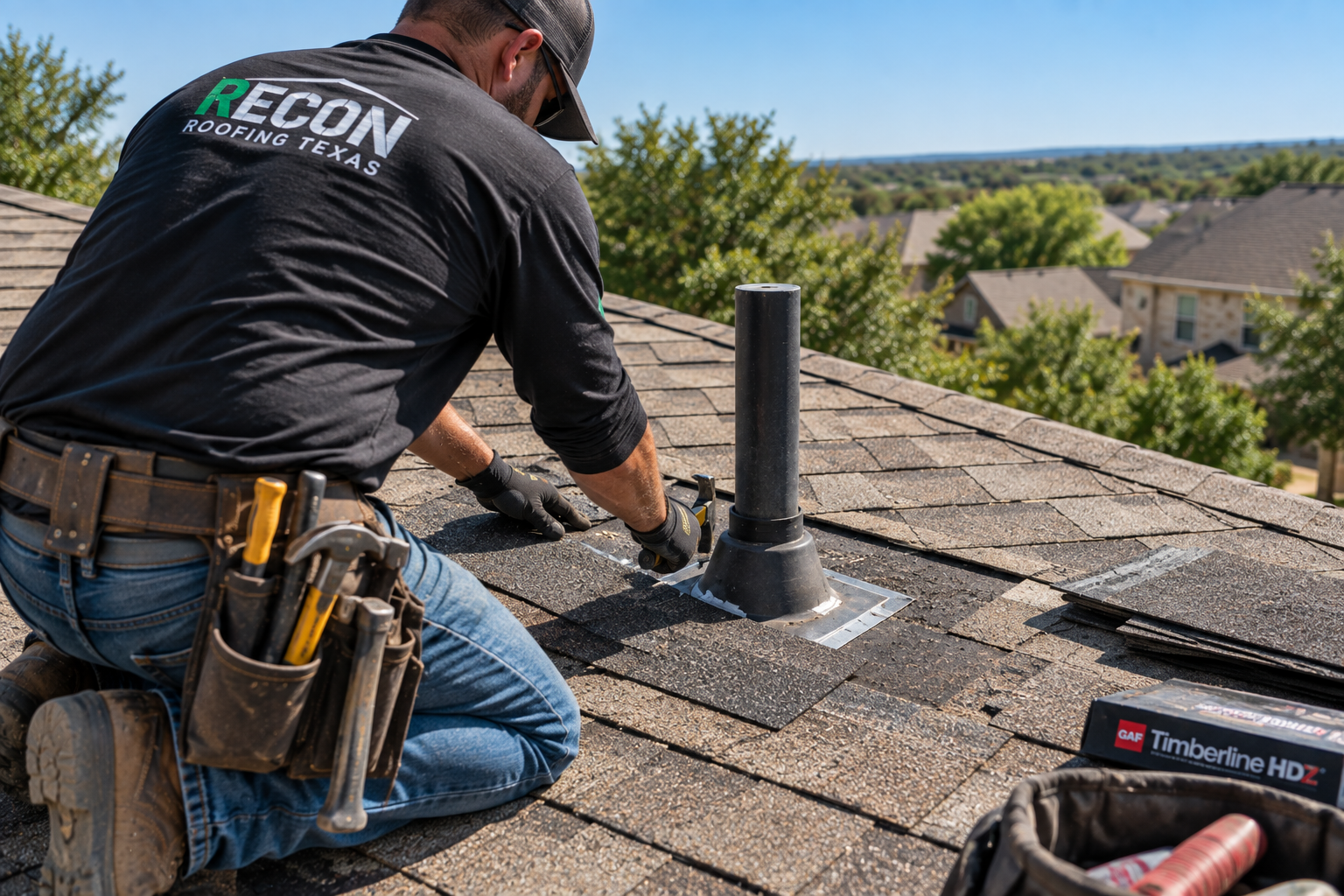
National figures give you the shape of it. Fixr puts the average roof repair at about $1,150, with most jobs landing between $400 and $1,900.
By type, they break it out roughly like this:
- Damaged or missing shingles: $150 to $700
- Flashing repair: $200 to $600
- Roof leak: $350 to $1,500
- Vent repair: $75 to $250
- Skylight leak: $300 to $800
Now the comparison that matters. Fixr notes repairs can climb to around $6,000 on bigger jobs, against a national replacement average near $10,000. Central Texas replacement numbers run higher than that on most homes, and we break those down in our Central Texas roof replacement cost guide.
The flip is not a formula, but it is close to this. Once a single repair passes roughly a third of what replacement would cost, and the roof is past the halfway point of its life, you are buying the wrong thing.
A $600 repair on a nine year old roof is easy math. A $4,500 repair on a seventeen year old roof is a bad trade, and any roofer who lets you make it without saying so is not doing their job.
Your Shingles May Not Exist Anymore
Here is a wrinkle that catches people every time, and it has nothing to do with whether the repair works.
Shingle lines get discontinued. Colors get retired. Manufacturers reformulate. If your roof went on in 2011, the exact shingle on it may not be made in 2026, and even when the name still exists the color blend has usually drifted.
Then there is weathering. Ten years of Texas sun changes a shingle's color whether or not the product changed. A brand new shingle next to a decade-old one does not match, even when it is technically the same shingle.
What this means in practice. A repair on the back slope where nobody looks is fine. A repair on the front elevation facing the street may leave you with a visible patch you cannot unsee, and that stays there until you replace the roof.
Ask before the work starts. Can you match this, and what will it look like from the curb? A roofer who has been doing this locally will tell you honestly, and sometimes the answer changes which option you pick.
The Middle Option Almost Nobody Offers You
The conversation usually gets framed as patch it or replace all of it. There is a third thing, and it is underused.
You can replace one slope.
Roofs do not wear evenly. The south and west faces take the most sun and usually fail years before the north side. If your south slope is done and the rest of the roof has real life left, replacing that one plane is a legitimate option.
Being straight about the tradeoffs. You will have a visible color difference between the new slope and the old ones. You lose some of the per-square efficiency, so it costs more per square foot than doing the whole roof at once. And it complicates a manufacturer warranty, since the system is no longer uniform.
But on the right house it can buy five or six years for a fraction of a full replacement. It is worth asking about. Most roofers will not raise it on their own, because a full replacement is a better job for them.
What Is the 25 Percent Rule, and Does It Apply in Texas?
You will run into this number if you research long enough, usually stated as fact with no state attached to it.
It is a Florida rule. Florida's building code says that "not more than 25 percent of the total roof area or roof section of any existing building or structure shall be repaired, replaced, or recovered in any 12 month period unless the entire roofing system or roof section conforms to the requirements of this code."
In plain terms, in Florida, once you pass a quarter of the roof, you may be forced to bring the whole thing up to current code.
Texas has no equivalent statewide rule, and neither do the cities in our service area. So if a contractor tells you the 25 percent rule requires a full replacement on your Leander or Cedar Park house, they are quoting the wrong state's code at you.
What does apply here is the layer limit. Local code generally will not let a new roof go over two existing layers, and Georgetown specifically requires a full tear-off when a roof already has two or more layers. If your house has been roofed over once already, that alone can turn a planned repair into a tear-off.
When to Push Back on a Replacement Recommendation
Replacement is sometimes the honest answer. It is also the answer that pays better, so it deserves a little scrutiny.
A replacement recommendation should come with evidence you can look at. Photographs of the actual failures on your roof, not stock images and not generalities. Specific locations. An assessment of the decking. A reason that goes beyond the roof's age.
"It is fifteen years old" is not a diagnosis. Plenty of fifteen year old roofs have years left in them.
If somebody quotes a replacement without getting on the roof, or cannot show you a single photo of what is wrong, get a second opinion before you sign anything. Our guide to choosing a roofing contractor in Central Texas covers what else to ask.
And the reverse is worth saying too. A roofer who insists on repairing a twenty year old roof with widespread wear may just be avoiding a hard conversation. Cheap is not the same as right.
A Repair Can Be a Way to Buy Time
This is the part that reframes the whole decision, and it is the reason we recommend repairs more often than people expect.
Choosing a repair does not have to mean you think the roof is fine. It can mean you know a replacement is coming and you would rather do it on your terms.
Consider what changes when you have eighteen months instead of a weekend. You can replace it in the right season rather than during the July heat or the middle of hail season. You can get three real bids and compare them line by line. You can arrange financing instead of taking whatever is offered. You can settle whether Class 4 impact resistant shingles make sense for your insurance situation, since Texas carriers file their own premium discounts for them. You can pick a roofer instead of picking whoever answers the phone at nine on a Sunday night.
An eight hundred dollar repair that buys you two years of planning is not a waste of money. It is the difference between a decision and an emergency.
The repairs that genuinely waste money are the ones made to avoid a decision that has already been made. If you know the roof is finished and you patch it anyway, you are just paying to postpone the same check.
Get a Second Opinion Before You Decide
If you have one recommendation in hand and it does not sit right, that instinct is usually worth listening to. This is a five figure decision either way, and it deserves more than one look.
Recon Roofing is veteran owned and based in Leander, working across Cedar Park, Round Rock, Georgetown, Liberty Hill and Pflugerville. Our inspections are free, they come with photos and a written assessment, and there is no obligation attached.
We will tell you which of the five questions above applies to your roof and why. Sometimes that answer is a repair we can do next week. Sometimes it is a replacement you should plan for next spring. Either way you will know what you are looking at.
Schedule your free roof inspection and get a straight read on it.
Need help with your roof?
Text us for a free estimate. No pressure, no sales pitch.